
ReviewExpo is reader-supported: some links on this page are affiliate links, and as an Amazon Associate ReviewExpo earns from qualifying purchases at no extra cost to you. Learn more.
360 camera booths come in three types defined by the platform diameter of the spinning rig. You need a platform diameter of 26.8 inches or less for a compact setup to fit in small venues. Measure your available floor space to determine if a compact or standard 360 camera booth meets your requirements.
360 Camera Booth Types Among the Listings We Screened
| Type | What sets it apart | Listings we screened | Price range |
|---|---|---|---|
| Compact Booths | platform diameter up to 26.8in | 2 | $599 to $1499 |
| Standard Booths | platform diameter 26.8 to 39.4in | 5 | $599 to $1499 |
| High Capacity Booths | max capacity 4 people and up | 0 | – |
Counted over the 17 listings this site screened; a listing that does not state the figure a type is defined by is not counted under any type.
Where these choices show up in our reviews
Prices across these 3 run from $1499 to $1499; each one has a full review here.


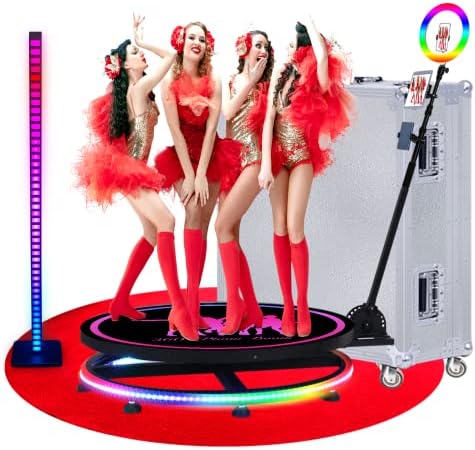
Compact 360 Camera Booths
Compact 360 camera booths are defined by a platform diameter of up to 26.8 inches. These units are designed for environments where floor space is at a premium, such as small retail storefronts, hotel lobbies, or private parties in residential spaces. Because the footprint is smaller, these rigs allow for a closer proximity between the camera and the person on the platform, which can result in a more intimate framing of the subject.
Beginners can find a clear overview in our guide on how a 360 camera booth works for new owners.
Compact 360 camera booths offer mobility but limit user movement
The primary advantage of a compact 360 camera booth is its mobility and ease of placement. You can position these rigs in tight corners where a larger rig would physically not fit. However, the smaller diameter limits the movement of the person on the platform. If a person moves too quickly or extends their arms too far, they may risk stepping off the edge or being cropped out of the frame.
Small platform diameters require users to stay centered for better footage
A common mistake occurs when a buyer selects a compact booth for a high-traffic event with many participants. If the platform is too small for the average height of the guests, the experience becomes restricted, and the resulting footage may feel cramped. Choosing a 26.8 inch diameter or less ensures the rig can be placed anywhere, but it requires the user to stay centered.
Standard 360 Camera Booths
Standard 360 camera booths feature a platform diameter ranging from 26.8 to 39.4 inches. This category serves as the middle ground for most commercial applications, such as weddings, corporate activations, and brand launches. These rigs provide enough surface area for most adults to stand comfortably while allowing for a full range of motion without the risk of stepping off the platform.
Standard 360 camera booths balance a stable footprint with versatile usability
The main advantage of a standard 360 camera booth is the balance between footprint and usability. It provides a stable base that accommodates various heights and poses, making it a versatile choice for general public use. While it takes up more room than a compact model, it remains manageable in most standard event halls. These units are generally priced in the middle of the market range.
See how the lighting affects your footage in our review of the 360 Photo Booth with integrated rings.
Required clearance around standard 360 camera booths prevents camera obstructions
When choosing a standard 360 camera booth, you must consider the clearance around the rig. Because the platform is wider, you need to ensure there is enough space for the camera to rotate 360 degrees without hitting nearby walls or furniture. If the space is too tight, the camera may hit an obstruction, causing a jerk in the footage or a complete stop of the motor.
High Capacity 360 Camera Booths
High capacity 360 camera booths are defined by a max capacity of 4 people or more. These are large-scale spinning camera rigs designed for group experiences where multiple people need to be on the platform simultaneously. These rigs require significant floor space and are often used for large-scale activations where the goal is to capture a group of friends or a team in a single rotation.
High capacity 360 camera booths capture group dynamics with robust motors
The advantage of a high capacity 360 camera booth is the ability to capture group dynamics that smaller rigs cannot accommodate. By allowing more people on the platform, these rigs enable the creation of content that features more participants in a single shot. These units often require more robust motors to handle the increased weight and torque requirements of multiple people.
You can see the technical performance of the unit in our MWE360 Photo Booth review and spec breakdown.
Because there are currently no listings in the evaluated data that specify a max capacity of 4 or more, these units represent the upper limit of the category’s capability. If you require a rig for a group of four or more people, you must look for specialized industrial rigs that exceed the standard specifications found in most consumer-facing listings.
360 Camera Booth Comparison
| 360 Camera Booth Type | Best-fit Buyer | Main Advantage | Main Compromise |
|---|---|---|---|
| Compact Booths | Small venues or retail | Small footprint | Limited movement |
| Standard Booths | Weddings and corporate | Balanced usability | Requires more clearance |
| High Capacity Booths | Large group activations | Multiple participants | Significant floor space |
How do you choose the right 360 camera booth?
Choosing the right 360 camera booth depends on your specific venue constraints and the number of people you intend to film at once. If you are hosting an event in a small boutique or a room with limited floor space, a compact 360 camera booth with a diameter of 26.8 inches or less is the correct choice. This ensures the rig can be placed without obstructing walkways.
Standard 360 camera booths provide stability for individuals and pairs
If you are planning a standard event like a wedding or a brand activation where individuals or pairs will use the rig, a standard 360 camera booth is the most practical option. These rigs offer a platform diameter between 26.8 and 39.4 inches, providing the necessary stability for most users. You should measure your intended area to ensure you have at least 4 feet of clearance around the platform for the camera’s rotation.
High capacity 360 camera booths require verified weight and occupancy limits
If your goal is to capture large groups of people in a single spin, you require a high capacity 360 camera booth. Since most standard listings do not offer a max capacity of 4 or more, you must verify the specific weight and occupancy limits of a rig before purchasing. Choosing a rig with a lower capacity than your group size will result in a failed experience where some participants are left out of the shot.
For more details on this specific size, view our full FUTOBOOZ 360 Booth review for specifications.
How do these rigs compare to professional standards?
How do these rigs compare to professional standards depends on the motor torque and lighting requirements of your specific production. Professional grade rigs, such as the Z360 or similar high-torque industrial rigs, are known for offering higher RPM stability and heavy-duty motors. The 360 camera booths evaluated here generally focus on consumer-grade use, meaning they may not offer the same level of heavy-duty motor stability as industrial rigs.
External studio-grade lighting ensures consistent exposure for high-end commercial work
Another standard is studio-grade lighting, such as 100W+ LED panels. Professional setups use high-output constant light rather than basic ring lights for consistent exposure. While many 360 camera booths come with integrated lighting, they may not reach the 100W+ output used in professional studio environments. If you require perfectly consistent exposure for high-end commercial work, you may need to supplement the booth with external studio-grade lighting.
Professional-grade spinning camera rigs offer higher RPM stability for heavy-duty use
When comparing these options, it is important to understand the difference between a consumer-grade spinning camera rig and an industrial one. A consumer-grade rig is designed for ease of use and portability, while a professional-grade rig is built for high-frequency, heavy-duty operation. If your use case involves hundreds of rotations per day, the higher RPM stability of a professional-grade rig becomes a deciding factor over the portability of a standard 360 camera booth.
Browse our other 360 camera booth pages
- Choosing the Best 360 Photo Booth for Professional Events Under $1500
- The 360 Photo Booths That Work Best with Ring Lights
- Which 360 Camera Booth Works Best for Corporate Events?
- The 360 Camera Booths That Work for Outdoor Parties
- Creating an Interactive Video Experience for Guests With a 360 Camera Booth
- Wedding 360 Photo Booth Machines Compared