
ReviewExpo is reader-supported: some links on this page are affiliate links, and as an Amazon Associate ReviewExpo earns from qualifying purchases at no extra cost to you. Learn more.
SDI Output for professional camcorders should range from 6 Gbps to 12 Gbps depending on the required resolution and frame rate. You need at least 12 Gbps for uncompressed 4K video transmission to a remote truck, while 6 Gbps suffices for standard high-definition workflows.
If your project involves long-form storytelling, you should compare the best professional camcorder for documentary filmmaking to see which handles heavy footage best.
Recommended SDI Output for Professional Camcorders
| Use Case | Recommended SDI Output | Why this number |
|---|---|---|
| Standard HD Production | 6 Gbps | Supports 1080p at 60 fps with sufficient headroom for standard metadata. |
| High-Frame Rate HD | 6 Gbps | Handles 1080p at 120 fps, which requires a higher bitstream than standard 60 fps. |
| 4K Video Streaming | 12 Gbps | Required to transmit uncompressed 4K video to a remote truck or broadcast monitor. |
| Multi-Camera Sync | 12 Gbps | Ensures high-bandwidth 4K streams are available for simultaneous multi-view monitoring. |
Professional Camcorders covered by our own reviews
Prices across these 3 run from $1603.45 to $2498; each one has a full review here.
For tight environments where mobility is key, view our comparison of the best professional camcorder for small spaces.
Couples looking for high-end coverage can see which is the best professional camcorder for wedding videography to ensure reliable performance.


What happens if you under-provision or over-buy SDI Output?
Under-provisioning SDI Output occurs when the data stream from the professional camcorder exceeds the bandwidth of the physical cable or the receiver’s input. If the camera attempts to push a 4K signal through a 6 Gbps path, the result is a bitrate bottleneck, which causes blocky artifacts or dropped frames in high-motion scenes. This failure results in unusable footage that requires a full re-shoot, costing the production both time and money.
Producers needing real-time feeds should identify the best professional camcorder for live streaming to ensure low-latency output.
Higher SDI bandwidth costs more without improving 1080p image quality
Over-buying SDI Output involves selecting a professional camcorder with 12 Gbps capabilities when the workflow only requires 6 Gbps. While this ensures future-proofing, the cost of this extra capacity is reflected in the purchase price of the hardware. Because SDI is a physical transmission standard, extra bandwidth does not improve the image quality of a 1080p signal; it simply provides a wider pipe that remains mostly empty. Choosing a higher tier than necessary results in a higher capital expenditure without a corresponding increase in the immediate visual output of the production.
Newcomers to the industry can find the best professional camcorder for beginners to simplify their initial equipment investment.
Journalists on the move need to evaluate the best professional camcorder for news reporting for quick deployment and reliability.
What is the most common mistake with SDI Output?
The most common mistake is assuming that a higher SDI Output number automatically improves the visual clarity or resolution of the image. SDI Output measures the maximum data transmission speed over a cable, not the resolution of the sensor or the clarity of the lens. A 12 Gbps output does not make a 1080p image look sharper than a 6 Gbps output; it only allows for larger files or higher frame rates to be sent over the wire.
For creators on the go, you might explore the best entry-level cinema camera for travel to balance size and image quality.
Matching SDI bandwidth to specific resolution requirements saves on costs
Instead of prioritizing the highest Gbps number, you should optimize for the specific resolution and frame rate required by your delivery platform. If your final output is 1080p, a 6 Gbps connection provides a stable path for the data. If your delivery requires 4K, you must have 12 Gbps to avoid signal degradation. Identifying the final output requirement first ensures you do not pay for bandwidth that your project will never utilize.
Understanding your project needs starts by learning about resolution for professional camcorders to ensure you aren’t overspending on pixels.
To understand your lens requirements, examine the details for optical zoom for professional camcorders.
How does SDI Output interact with other professional camcorder specs?
SDI Output interacts with resolution and frame rate as the primary transport mechanism for the camera’s data. While resolution measures the total number of distinct points of data in a single frame, SDI Output determines how quickly those points can be moved to a monitor. If the resolution is high but the SDI Output is low, the camera will be unable to transmit the full image, leading to a failure in the signal chain.
Maintaining a smooth image requires you to analyze the bitrate for professional camcorders to avoid compression artifacts.
Budgeting for a new rig is easier when you view what professional camcorders cost at various price points.
Higher frame rates increase the data demand on SDI output
Frame rate also creates a direct demand on the SDI Output. Because frame rate measures the number of individual images captured every second, a higher frame rate requires the SDI Output to move more data per second to maintain the same resolution. For example, moving from 30 fps to 60 fps doubles the amount of data that must pass through the SDI Output every second. If the SDI Output is not high enough to accommodate this increase, the camera will be forced to drop the frame rate or reduce the image quality.
Protecting your investment is vital, so research professional camcorder warranties before making your final purchase.
SDI output bandwidth limits the quality of live broadcast feeds
SDI Output also functions as a gateway to the camera’s internal recording formats, such as RAW vs. Compressed Log. While the internal storage handles the recording, the SDI Output dictates what can be sent to a live broadcast feed in real-time. If you require high-bandwidth uncompressed 4K transmission for a live feed, the SDI Output must be at least 12 Gbps. If the SDI Output is the bottleneck, the feed will suffer from artifacts regardless of how high the internal recording quality is.
Understanding the hardware basics is helpful when you study the different types of professional camcorders available.
If you are new to this gear, learn the basics of a professional camcorder and how its internal systems function.
Choosing SDI bandwidth based on data volume like a highway
Think of SDI Output like a highway: a wider road allows more cars to travel at once, but it doesn’t make the cars themselves move faster. If you only have ten cars (the data from a 1080p image), a four-lane highway (12 Gbps) is unnecessary, but a one-lane road (under 6 Gbps) will cause a traffic jam. You must choose a highway that matches the number of cars you intend to send.
Specific performance data is available in our full review of the XA35.
How does SDI Output affect transmission distance?
The SDI Output value determines the maximum distance a signal can travel before it requires a signal booster or a different cable standard. Higher Gbps ratings are more sensitive to cable length because they transmit more data per second. For example, 12 Gbps signals may require high-quality, shorter cables to maintain integrity compared to 6 Gbps signals, which can travel further over standard SDI cabling.
You can find more technical details in our full review of the Canon XA30.
Detailed specifications are listed in our full review of the AG-UX90PJ.
Planning requirements for SDI output distance and receiving hardware
When planning a shoot, a buyer first identifies the required output resolution. They then determine the maximum distance the signal must travel to the monitor or truck. If the distance is long and the resolution is high, they must ensure both the SDI Output and the cable grade support the 12 Gbps requirement. Finally, they verify that the receiving hardware can accept the specific Gbps rating to ensure a stable connection.
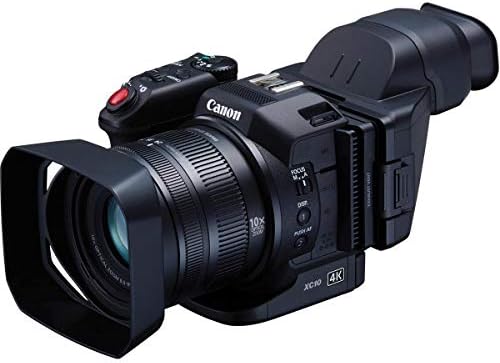
For a deep dive into the specs, see our full review of the Canon XC10.
Where to go next in our professional camcorder coverage
- Professional Camcorders for Documentary Filmmaking Compared
- Which Professional Camcorder Is Best for Live Streaming?
- Best Entry-Level Cinema Cameras for Travel
- Compact Professional Camcorders for Small Spaces Compared
- Choosing the Best Professional Camcorder for Beginners
- The Professional Camcorders That Work Best for Wedding Videography