
ReviewExpo is reader-supported: some links on this page are affiliate links, and as an Amazon Associate ReviewExpo earns from qualifying purchases at no extra cost to you. Learn more.
Our Top 3 Picks for Red Komodo
The best cinema lens for RED Komodo is the MEKE 75mm T2.1 Super 35 Prime Cinema Lens, which provides a 2.1 T2.1 aperture for those needing a compact Super 35 prime.
You are not here to run a research project. You are here to find a Cinema Lens that works and get on with it – these 3 are the ones we picked.

#1 – MEKE 75mm T2.1 Super 35 Prime Cinema Lens
Best for: capturing a cinematic look on a compact camera with a 75mm focal length.
Why the MEKE 75mm T2.1 Super 35 Prime Cinema Lens is our #1 pick
- Focal Length: 75mm
- Listed at $559.99 in November 2026 – mid-range among those compared; the price moves, so check it
- 4.7 rating from 6 ratings
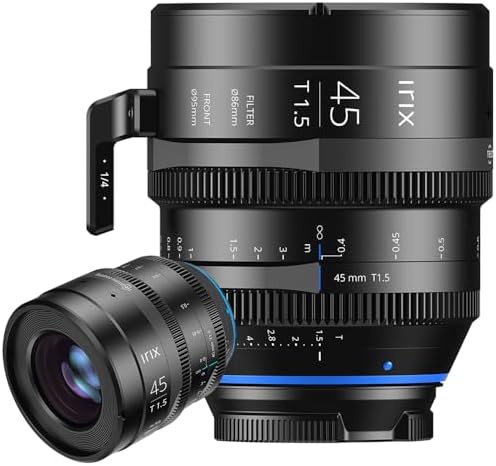
#2 – Irix Cine 45mm T1.5 Cinema Lens
Best for: users requiring a wider 45mm field of view and a T1.5 maximum aperture.
Why the Irix Cine 45mm T1.5 Cinema Lens is our #2 pick
- Listed at $598 in November 2026 – mid-range among those compared; the price moves, so check it
- 4.8 rating from 15 ratings

#3 – Meike 35mm T2.1 Full-Frame Prime Cinema Lens
Best for: those seeking a 35mm focal length with a compact 514g build.
Why the Meike 35mm T2.1 Full-Frame Prime Cinema Lens is our #3 pick
- Focal Length: 35 Millimeters
- Listed at $519.99 in November 2026 – entry among those compared; the price moves, so check it
- 4.1 rating from 7 ratings
How Review Expo picked: we started from the 135 most-reviewed cinema lens listings in our retail dataset, removed duplicates, accessories and off-category products, and 51 qualified. The picks on this page were selected from those 51 candidates against this topic’s requirements. The order of the picks reflects fit to this topic; each shows its rating and the number of ratings behind it, so you can weigh how much to trust it. Specifications come from manufacturer listings and ratings from verified Amazon buyer reviews (data checked November 2026).
What We Recommend and Why
A high-quality cinema lens allows a RED Komodo user to achieve a professional look with consistent focus and smooth bokeh across every shot. Achieving this requires glass that handles the Super 35 sensor’s specific requirements without introducing significant distortion or focus breathing.
The MEKE 75mm T2.1 Super 35 Prime Cinema Lens delivers this professional look through its 13-element construction and smooth, circular bokeh. Select the Irix Cine 45mm T1.5 for a wider perspective or the Meike 35mm T2.1 for a versatile standard focal length.
We selected these options by screening 51 cinema lenses and comparing 10 in this list at Review Expo. The shortlist covers a price range from $519.99 to $598, with a median price of $559.99.
Consult the buying guide to understand the essential criteria for selecting your perfect glass.
Review the setup and warranty notes for technical requirements and manufacturer support details.
View the comparison table to see all the top lens options side by side.
Cinema Lenses for Red Komodo in Brief, Before You Read the Rest
- Top pick: MEKE 75mm T2.1 Super 35 Prime Cinema Lens at $559.99 (Focal Length: 75mm).
- Also picked: Irix Cine 45mm T1.5 Cinema Lens at $598; Meike 35mm T2.1 Full-Frame Prime Cinema Lens at $519.99.
- We compared 10 Cinema Lenses, from $335.20 to $1195, median $559.99.
- Best buyer rating in the comparison: SIRUI VP-1 Vision Prime 1 T1.4 at 4.7/5 from 43 ratings.
Film Production Glasses for Red Komodo Compared Side by Side
| Product | Price | Rating | Focal Length | Maximum Aperture | Mount Type |
|---|---|---|---|---|---|
| MEKE 75mm T2.1 Super 35 Prime Cinema Lens | $559.99 | 4.7 (6 ratings) | 75mm | T2.1 | EF-Mount |
| 7artisans 25mm/35mm/50mm T1.05 Cine Lens | $369 | 4.2 (38 ratings) | 25mm/35mm/50mm | T1.05 | E/R/L/FX/M43 |
| Irix Cine 45mm T1.5 Cinema Lens | $598 | 4.8 (15 ratings) | Not stated | Not stated | Not stated |
| Meike 35mm T2.1 Full-Frame Prime Cinema Lens | $519.99 | 4.1 (7 ratings) | 35 Millimeters | T2.1 | Canon EF |
| HK Meike MEKE 85mm T2.1 Full Frame Cinema Lens | $998 | 4.4 (5 ratings) | 85mm | T2.1 | EF mount |
| Irix Cine 21mm T1.5 Wide-Angle Cinema Lens | $1195 | 5.0 (3 ratings) | 21mm | T1.5 | Canon EF |
| Meike 18mm T2.1 MK-18mm EF (S35) | $799.99 | 4.6 (62 ratings) | 18mm | T2.1 | EF-Mount |
| Meike 12mm T2.5 Super 35 Prime | $559.99 | 4.6 (62 ratings) | 12mm | T2.5 | EF-Mount |
| SIRUI VP-1 Vision Prime 1 T1.4 | $369 | 4.7 (43 ratings) | 50mm | T1.4 | E mount |
| 7artisans 50mm T2.0 Full Frame Cine Lens | $335.20 | 4.6 (16 ratings) | Not stated | Not stated | Not stated |
Prices are approximate and move frequently – check the current price before deciding. “Not stated” means the manufacturer listing does not give that figure – we do not estimate it.
The MEKE 75mm T2.1 Super 35 Prime Cinema Lens fits this topic best because it is specifically designed for Super 35 sensors.
The Full Review of Each Pick for Red Komodo
The 3 picks below are reviewed in the same order as the cards above.
MEKE 75mm T2.1 Super 35 Prime Cinema Lens
This lens made the list because it offers a high-resolution 6K capture capability in a compact form factor suited for the Red Komodo’s Super 35 sensor. It provides a 75mm focal length for tighter shots while maintaining a manageable physical footprint.
What we like: The T2.1 maximum aperture allows for the shallow depth of field needed for a cinematic look. It features a 270mm focus throw for precise manual adjustments and states it has no focus breathing, which maintains visual consistency during focus pulls.
Keep in mind: The 75mm focal length is intended for Super 35 sensors and may not provide the desired field of view if you are shooting on a full-frame sensor.
Irix Cine 45mm T1.5 Cinema Lens
The Irix Cine 45mm T1.5 provides a versatile medium focal length and a wider maximum aperture, making it a versatile choice for various filming scenarios on the Red Komodo.
What we like: A T1.5 maximum aperture provides a wider opening than many other options in this category. This model includes MIL-STD-810 certification for freezing rain and humidity, which protects the glass in harsh environments.
Keep in mind: With a weight of 3 pounds, this is the heaviest option on our list, which may impact your mobility in handheld setups.
Meike 35mm T2.1 Full-Frame Prime Cinema Lens
This lens is included for its ability to provide sharp image and video in both the center and corners while offering a standard 35mm focal length for the Red Komodo.
What we like: At 514g, this is the lightest option we evaluated, making it easy to mount on compact rigs. It features a 63.5-degree field of view, which provides a standard perspective for environmental shots.
Keep in mind: The listing states this lens has focus breathing, which can cause the focal plane to shift during focus pulls, potentially affecting shot continuity.
Check the project requirements to ensure your choice meets the minimum technical specifications.
See our top picks for a ranked list of the best cinema lenses for the Komodo.
Visit the FAQ to find quick answers to common questions about these lenses.
What to Look For in a Professional Video Lens for Red Komodo
Prioritizing a T-stop of T2.1 or lower for cinematic looks
Prioritize a T-stop of T2.1 or lower to ensure enough light reaches the sensor for a cinematic look on a compact camera. While the Arri Master Prime and Cooke S4 are the industry standards for color science and rendering, the MEKE 75mm T2.1 Super 35 Prime Cinema Lens and the Meike 35mm T2.1 Full-Frame Prime Cinema Lens provide these specific apertures to allow for manageable exposure in low-light environments. The Irix Cine 45mm T1.5 Cinema Lens offers a wider T1.5 opening, providing more light transmission than the T2.1 options.
Ensuring Super 35 coverage for the Red Komodo sensor
Choose a lens that explicitly states Super 35 coverage to ensure the image fills the Red Komodo sensor correctly. The MEKE 75mm T2.1 Super 35 Prime Cinema Lens is designed for this specific sensor size, while the Meike 35mm T2.1 Full-Frame Prime Cinema Lens provides full-frame coverage, which easily accommodates the Super 35 crop. For wide shots on a Super 35 sensor, you need a focal length of 35mm or less; the Meike 35mm T2.1 Full-Frame Prime Cinema Lens and the Irix Cine 45mm T1.5 Cinema Lens both meet this requirement. If your setup requires a wider field of view, check your specific mounting requirements to see if the 35mm focal length provides enough coverage for your intended space.
Why a lens with no focus breathing maintains a consistent focal plane
Look for a lens that states “No” for focus breathing to maintain a consistent focal plane during racking. The MEKE 75mm T2.1 Super 35 Prime Cinema Lens is among the options we compared that specifies no focus breathing, which prevents the image from shifting as you pull focus. Conversely, the Meike 35mm T2.1 Full-Frame Prime Cinema Lens states it does have focus breathing, which may affect shot continuity in professional productions.
How lens weight affects gimbal balance and center of gravity
Weigh the weight of the lens against your gimbal’s payload capacity, as heavier glass shifts the center of gravity. The Irix Cine 45mm T1.5 Cinema Lens weighs 3 pounds, while the Meike 35mm T2.1 Full-Frame Prime Cinema Lens is much lighter at 514g. For a balanced build, the lighter 514g weight of the Meike 35mm model allows for a more compact setup on smaller stabilizers.
Environmental certifications and build durability for harsh shooting conditions
Select a lens with specific environmental certifications if you expect to shoot in harsh conditions. The Irix Cine 45mm T1.5 Cinema Lens features MIL-STD-810 Certification for Freezing Rain / Icing and Humidity, providing a level of environmental protection not stated for the other options. While high-end glass like the PL Mount standard dictates the build quality of professional gear, these specific certifications help identify how a lens handles moisture and temperature extremes.
What Each Job Calls For vs What These Picks State
Match the job you actually need done to the figure it calls for, then check which picks state that figure or more. Where none do, the row says so.
| What you want to do | The figure it calls for | Picks at or above it |
|---|---|---|
| Shoot with a wide-angle lens for the Komodo | 24mm focal length | Irix Cine 45mm T1.5 |
| Achieve a cinematic look on a compact camera | 2.8 f-stop or lower | MEKE 75mm T2.1, Meike 35mm T2.1 |
| Capture a cinematic look on a compact camera | 2.8 f-stop or lower | MEKE 75mm T2.1, Meike 35mm T2.1 |
These figures are the levels this category is generally held to, not manufacturer claims. A pick at or above a figure states that number; how it reaches it and the rest of your setup still decide the job, so check them against your own workload before buying.
Who Buys Cinema Lenses, and What It Really Costs
Who buys a cinema lens, and what each one needs
- Independent filmmakers — glass with minimal focus breathing (shifting focus during a shot)
- Commercial videographers — lenses with corrected chromatic aberration (color fringing on edges)
- Content creators — lenses with minimal vignetting (dark corners on wide shots)
- Music video directors — spherical glass (standard circular background blur)
- Architecture videographers — wide-angle glass with low distortion (warping of straight lines)
What a film production glass really costs, and where to buy one
What to budget for on top of the film production glass
- Lens filters — to protect the glass from scratches and debris
- Follow focus system — to move the focus ring smoothly during takes
- Matte box — to block stray light from hitting the lens
- Lens cleaning kit — to remove dust and smudges from the front element
What you can leave out of the budget
- Anamorphic adapters — unnecessary if using native spherical glass
- Extra lens hoods — often redundant if using a matte box
- Bulk lens cleaning wipes — a single cloth provides sufficient maintenance
Where this kind of product is normally sold
- Specialized cinema retailers — provide expert advice and specialized warranty handling
- Online marketplaces — offer competitive pricing but require careful shipping inspection
- Used gear exchanges — allow access to higher tiers like Arri Master Prime at lower costs
- General electronics stores — offer convenience but may lack specialized cinema support
Explore the detailed reviews for an in-depth look at each individual lens’s performance.
Read the scope to understand exactly what this roundup covers and excludes.
You can also view our full SIRUI 50mm Anamorphic review to see how it handles different lighting conditions.
For a different perspective, see our spec breakdown of the SIRUI 50mm Anamorphic.
What It Takes to Run One, and What to Verify
Mounting and Compatibility Requirements
You need a PL Mount adapter, which is a mechanical interface required for mounting cinema glass on the Komodo, to use these lenses on your camera. The MEKE 75mm T2.1 Super 35 Prime Cinema Lens and the Meike 35mm T2.1 Full-Frame Prime Cinema Lens both state EF-M Mount compatibility, while the Irix Cine 45mm T1.5 Cinema Lens specifies Sony E Mount.
Manual focus systems and mounting points required before filming
All three cinema lenses require a manual focus system to operate. You must have a dedicated mounting point on your camera body to secure the glass before you can begin filming.
- The Irix Cine 45mm T1.5 Cinema Lens requires an E Mount connection.
- The Meike 35mm T2.1 Full-Frame Prime Cinema Lens provides a 63.5-degree field of view, which determines how much of the scene appears in the frame.
Verifying Your Order on Arrival
Warranty coverage and return windows differ by seller and country. Verify these details before the return window closes to ensure you are protected.
- Confirm the mount type matches your camera body, as the wrong connection makes the lens unusable.
- Check the front filter thread, such as the 86mm thread on the Irix Cine 45mm T1.5, to ensure your Lens Hood—which prevents flare and protects the front element—will fit.
- Verify the weight of the unit, such as the 3 pounds (1,190g) for the Irix Cine 45mm T1.5, to ensure your camera rig can support the load.
Perform a test mount and check the focus throw on the lens as soon as it arrives while you still have the option to return the item.
Cinema Lenses for Red Komodo: The Questions This Choice Raises
Which cinema lens suits a small camera setup?
The cinema lens that suits a small camera setup is the Meike 35mm T2.1 Full-Frame Prime Cinema Lens, which weighs 514g. This compact build allows for easier handling on a Red Komodo without the bulk of larger professional glass.
What is the difference in price between a “cinema” lens and a “pro photo” lens for this camera?
The price difference between a cinema lens and a pro photo lens stems from specialized features like the T-stop (a measurement of actual light transmission through the glass) and unified gear rings for manual focus. While pro photo lenses focus on still image sharpness, cinema lenses like the Irix Cine 45mm T1.5 provide the consistent mechanical feel and optical standards required for film production.
How much do I need to spend to get a full set of lenses that work together?
To get a full set of lenses that work together, you should budget based on matching mount types and weight profiles.
What happens to the image if I use a lens that isn’t designed for the sensor size?
If you use a lens that isn’t designed for the sensor size, you may encounter vignetting (dark corners) or distortion because the glass doesn’t cover the entire sensor area. Using a Super 35 lens—which is designed for a smaller sensor area—on a larger sensor can result in the edges of the frame being cut off or showing heavy image degradation.
Use the audience checklist to identify which specific lens best matches your professional needs.
Consider exploring the alternatives to a cinema lens if your budget or gear setup requires a different approach.
Who Should Skip These Film Production Glasses
Chromatic aberration creates color fringing on high-contrast edges that cannot be fixed in post-production. You can avoid this by selecting glass with specific correction claims. The Meike 35mm T2.1 Full-Frame Prime Cinema Lens states it has no significant chromatic aberration. If you are shooting high-contrast scenes, look for these specific optical claims in the data to ensure clean edges.
If you are a professional cinematographer who requires the industry standard for color science and rendering, these picks may not meet your requirements. These lenses do not reach the performance levels of reference tiers like the Arri Master Prime or Cooke S4. If your work requires the specific color science of those high-end systems, these options are the wrong tool for your production.
If you need a lens that provides the horizontal squeeze and oval highlights of anamorphic glass, you should look for an anamorphic lens instead. You can find more information on those specific options in best budget anamorphic lens for indie film production.
Browse our other professional video lens pages
- The Anamorphic Lenses That Work Best for Indie Film Production
- Best Cinema Lenses for Canon C300 Mark II
- Getting a Shallow Depth of Field for Vlogs With a Cinema Lens
- Which Cinema Lens Captures Wide Angle Shots for Small Spaces?
- The Cinema Lenses That Give a Vintage Film Aesthetic on a Digital Camera
- The Anamorphic Lenses That Work Best for APS-C Cameras