
ReviewExpo is reader-supported: some links on this page are affiliate links, and as an Amazon Associate ReviewExpo earns from qualifying purchases at no extra cost to you. Learn more.
Our Top 3 Picks for a Vintage Film Aesthetic
The best way to get a vintage film aesthetic on a digital camera is the SIRUI 135mm T2.9 1.8X Anamorphic Lens, which uses an 1.8X squeeze factor for cinematic subjects needing a telephoto feel.
Most Cinema Lens options look identical on a listing page. These 3 are the ones that differ where it actually matters.

#1 – SIRUI 135mm T2.9 1.8X Anamorphic Lens
Best for: filming a high-end commercial with a heavy anamorphic squeeze.
Why the SIRUI 135mm T2.9 1.8X Anamorphic Lens is our #1 pick
- Listed at $1199 in November 2026 – premium among those compared; the price moves, so check it
- 5.0 rating from 2 ratings
Focal Length: 135mm · Maximum Aperture: T2.9
Against the other picks on focal length, pick #2 states 50 mm and pick #3 states 35mm.

#2 – SIRUI 50mm F1.8 1.33X SR-MEK7E Anamorphic Lens
Best for: filming a high-end commercial with a standard anamorphic squeeze.
Why the SIRUI 50mm F1.8 1.33X SR-MEK7E Anamorphic Lens is our #2 pick
- Listed at $286 in November 2026 – entry among those compared; the price moves, so check it
- 4.5 rating from 366 ratings
Focal Length: 50 mm · Maximum Aperture: f/1. 8
To put that focal length in context, pick #1 states 135mm and pick #3 states 35mm.
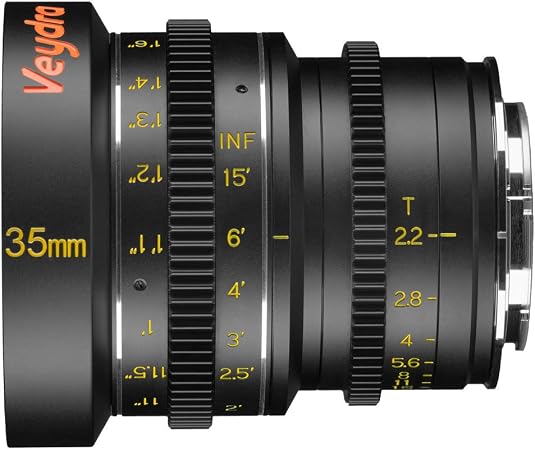
#3 – Veydra V1-35T22SONYEI Mini Prime 35mm T2.2
Best for: filming a high-end commercial with a subtle anamorphic squeeze.
Why the Veydra V1-35T22SONYEI Mini Prime 35mm T2.2 is our #3 pick
- Listed at $949 in November 2026 – premium among those compared; the price moves, so check it
- 5.0 rating from 2 ratings
Focal Length: 35mm · Maximum Aperture: T2.2
For comparison on focal length, pick #1 states 135mm and pick #2 states 50 mm.
For more technical details, view the SIRUI Saturn 75mm spec analysis to see its unique squeeze factor.
How Review Expo picked: we started from the 135 most-reviewed cinema lens listings in our retail dataset, removed duplicates, accessories and off-category products, and 51 qualified. The picks on this page were selected from those 51 candidates against this topic’s requirements. The order of the picks reflects fit to this topic; each shows its rating and the number of ratings behind it, so you can weigh how much to trust it. Specifications come from manufacturer listings and ratings from verified Amazon buyer reviews (data checked November 2026).
What We Recommend and Why
A vintage film aesthetic relies on the specific way an anamorphic lens distorts light into oval bokeh and horizontal reflections. Achieving this look requires a lens that balances a squeeze factor with a focal length that suits your subject distance.
The SIRUI 135mm T2.9 1.8X Anamorphic Lens delivers a distinct 1.8X squeeze, making it ideal for compressed, cinematic close-ups. Alternatively, the SIRUI 50mm F1.8 1.33X SR-MEK7E Anamorphic Lens serves a wider field of view, while the Veydra V1-35T22SONYEI Mini Prime 35mm T2.2 offers a sharp, prime alternative.
Our selection was made by screening 51 cinema lenses and comparing 11 in this page’s table at Review Expo. These picks span from $286 to $1199, and the median price of the 11 products in our comparison is $598.
What the Data Says About Cinema Lenses for a Vintage Film Aesthetic
- Top pick: SIRUI 135mm T2.9 1.8X Anamorphic Lens at $1199 (Focal Length: 135mm).
- Also picked: SIRUI 50mm F1.8 1.33X SR-MEK7E Anamorphic Lens at $286; Veydra V1-35T22SONYEI Mini Prime 35mm T2.2 at $949.
- We compared 11 Cinema Lenses, from $267 to $1199, median $598.
- Best buyer rating in the comparison: SIRUI 20mm T1.8 1.33X Anamorphic Lens at 4.6/5 from 45 ratings.
- Cheapest in the comparison that can film a high-end commercial with anamorphic squeeze: SIRUI 75mm F1.8 1.33X Anamorphic Lens at $267 (1 f-stop).
Cinema Lenses for a Vintage Film Aesthetic: Price, Rating and Specs Compared
| Product | Price | Rating | Focal Length | Maximum Aperture | Squeeze Factor |
|---|---|---|---|---|---|
| SIRUI 135mm T2.9 1.8X Anamorphic Lens | $1199 | 5.0 (2 ratings) | 135mm | T2.9 | 1.8X |
| SIRUI 50mm F1.8 1.33X SR-MEK7E Anamorphic Lens | $286 | 4.5 (366 ratings) | 50 mm | f/1. 8 | 1.33X |
| 7artisans 25mm/35mm/50mm T1.05 Cine Lens | $369 | 4.2 (38 ratings) | 25mm/35mm/50mm | T1.05 | Not stated |
| SIRUI Saturn 75mm T2.9 1.6X Anamorphic Lens | $599 | 4.1 (140 ratings) | 75mm | T2.9 | 1.6x |
| SIRUI FFEK6-E 50mm T2.9 1.6X Anamorphic Lens | $300 | 4.5 (84 ratings) | 50mm | T2.9 | 1.6 times |
| SIRUI 75mm F1.8 1.33X Anamorphic Lens | $267 | 4.5 (75 ratings) | 75 mm | f/1. 8 | 1.33x |
| SIRUI 20mm T1.8 1.33X Anamorphic Lens | $599 | 4.6 (45 ratings) | 20mm | T1.8 | 1.33X |
| SIRUI 20mm T1.8 1.33X Anamorphic Lens | $599 | 4.3 (37 ratings) | Not stated | Not stated | Not stated |
| SIRUI 35mm F1.8 1.33X Anamorphic Lens | $267 | 4.5 (24 ratings) | Not stated | Not stated | Not stated |
| Irix Cine 45mm T1.5 Cinema Lens | $598 | 4.8 (15 ratings) | Not stated | Not stated | Not stated |
| Veydra V1-35T22SONYEI Mini Prime 35mm T2.2 | $949 | 5.0 (2 ratings) | 35mm | T2.2 | Not stated |
Prices are approximate and move frequently – check the current price before deciding. “Not stated” means the manufacturer listing does not give that figure – we do not estimate it.
The SIRUI 135mm T2.9 1.8X Anamorphic Lens fits this topic best because its 1.8X squeeze factor and blue flare provide a distinct vintage anamorphic look.
The Full Review of Each Pick for a Vintage Film Aesthetic
The 3 picks below are reviewed in the same order as the cards above.
SIRUI 135mm T2.9 1.8X Anamorphic Lens
The SIRUI 135mm T2.9 1.8X Anamorphic Lens provides a heavy anamorphic squeeze to create a distinct vintage film aesthetic with its 1.8x squeeze factor. This lens produces a 3.2:1 frame in 16:9 mode, which is a common standard for wide cinematic looks.
What we like: This lens offers high sharpness and low distortion at a 135mm focal length. It provides a blue flare and a 1.8x squeeze factor, which creates the oval bokeh—the oval shape of out-of-focus highlights—that defines many classic film looks.
Keep in mind: The T2.9 maximum aperture is not enough to meet the 1.4 to 2.8 f-stop range required to film a high-end commercial with anamorphic squeeze.
SIRUI 50mm F1.8 1.33X SR-MEK7E Anamorphic Lens
The SIRUI 50mm F1.8 1.33X SR-MEK7E Anamorphic Lens is a versatile choice for a vintage film look because it offers a wide 2.4:1 widescreen cinema format. It uses Germany-made Schott glass elements to produce oval bokeh, the oval shape of out-of-focus highlights.
What we like: This lens provides an f/1.8 maximum aperture, which is sufficient to film a high-end commercial with anamorphic squeeze. It also features blue flare and horizontal sci-fi reflections for an organic film texture.
Keep in mind: The sensor coverage is limited to APS-C, which rules out users with full-frame cameras seeking a vintage film aesthetic.
Veydra V1-35T22SONYEI Mini Prime 35mm T2.2
The Veydra V1-35T22SONYEI Mini Prime 35mm T2.2 provides a modern, high-quality prime option for those seeking a vintage-style lens—new glass engineered to mimic old looks—rather than actual old glass.
What we like: The T2.2 maximum aperture sits at the easier end of the 1.4 to 2.8 f-stop range needed for high-end commercial anamorphic squeeze. It features a 300-degree focus rotation for precise manual adjustments.
Keep in mind: This lens does not state a flare type or a squeeze factor, meaning it does not provide the specific anamorphic squeeze or oval bokeh of the other options.
What to Look For in a Movie Camera Lens for a Vintage Film Aesthetic
How squeeze ratio compatibility determines the horizontal field of view
Choose a squeeze factor based on your desired aspect ratio, as this determines the horizontal field of view relative to the vertical. The SIRUI 135mm T2.9 1.8X Anamorphic Lens provides a 1.8x squeeze, which produces a 3.2:1 frame in 16:9 mode, while the SIRUI 50mm F1.8 1.33X and the SIRUI 20mm T1.8 1.33X offer a 1.33x squeeze for a 2.4:1 widescreen cinema format. To achieve a vintage film aesthetic, you need to match the squeeze to your camera’s sensor; for example, the 1.8x squeeze on the 135mm model provides a 2.4:1 frame on 4:3 sensors. While the PL Mount is the native professional standard for cinema lenses, these E Mount options provide the same anamorphic compression for Sony systems.
How specific lens flare types create intentional vintage light artifacts
Prioritize lenses that specify a flare type to ensure the vintage film look includes intentional light artifacts. Both the SIRUI 135mm T2.9 1.8X and the SIRUI 50mm F1.8 1.33X state they produce Blue Flare, which creates the horizontal sci-fi reflections and light effects common in older glass. The Veydra V1-35T22SONYEI Mini Prime 35mm T2.2 does not state a flare type in its specifications. Because lens flare is essential for achieving the vintage aesthetic, you should select a model that explicitly defines this characteristic to ensure consistent results across your shots.
Balancing optical aberrations with clarity for usable film character
Select a lens that balances character with clarity to ensure the vintage look doesn’t compromise production usability. You can spend around $286 to get a noticeable film look with the SIRUI 50mm F1.8 1.33X, which uses Germany-made Schott glass to provide oval bokeh and horizontal reflections without becoming too blurry for practical use. The Veydra V1-35T22SONYEI Mini Prime 35mm T2.2 offers a 35mm fixed focal length with a 300-degree focus rotation for precise control. While the Arri Master Prime and Cooke S4 represent the industry standard for color science and rendering, these options provide the organic texture of anamorphic glass at a lower entry point.
How focus throw distance affects manual pull during filming
Evaluate the focus ring rotation to determine how much physical movement is required to pull the subject into clarity. The Veydra V1-35T22SONYEI Mini Prime 35mm T2.2 provides a 300-degree focus rotation, allowing for a smooth, deliberate pull during filming. The SIRUI 50mm F1.8 1.33X features a 143.6° focus ring rotation angle with a 61.7 mm diameter ring. A longer throw generally allows for more precise adjustments in cinematic movements, whereas a shorter throw is faster for rapid changes. You start by identifying your required focal length, move to the focus throw to ensure it matches your shooting style, and end with a lens that balances these mechanical limits.
Comparing cinema lens weight for manageable handheld operation
Check the weight of the cinema lens to ensure it remains manageable for handheld operation. The SIRUI 135mm T2.9 1.8X Anamorphic Lens weighs 1294g/2.85lb, which is the heaviest option in this selection. The SIRUI 50mm F1.8 1.33X weighs approximately 560g, making it significantly lighter for mobile setups. You weigh the weight against your rig’s balance point, identify the maximum weight your stabilizer can support, and select the lens that fits your physical handling requirements. If a weight is not stated, such as on the Veydra V1-35T22SONYEI Mini Prime 35mm T2.2, you must verify the weight against your gear’s capacity before ordering.
See our curated list in our top picks.
Match your needs with the audience checklist.
Compare every model side by side in the comparison table.
What Each Job Calls For vs What These Picks State
Match the job you actually need done to the figure it calls for, then check which picks state that figure or more. Where none do, the row says so.
| What you want to do | The figure it calls for | Picks at or above it |
|---|---|---|
| Achieve a vintage film aesthetic with a wide squeeze | 1.8X squeeze factor | SIRUI 135mm T2.9 1.8X Anamorphic Lens |
| Capture an organic film texture with a wide aperture | T2.2 maximum aperture | Veydra V1-35T22SONYEI Mini Prime 35mm T2.2 |
| Film a high-end commercial with anamorphic squeeze | T2.8 maximum aperture | SIRUI 50mm F1.8 1.33X SR-MEK7E Anamorphic Lens |
These figures are the levels this category is generally held to, not manufacturer claims. A pick at or above a figure states that number; how it reaches it and the rest of your setup still decide the job, so check them against your own workload before buying.
Who Buys Cinema Lenses, and What It Really Costs
Who buys a cinema lens, and what each one needs
- Indie filmmakers — anamorphic glass for horizontal squeeze (stretching the image wide)
- Music video creators — vintage film aesthetic with spherical bokeh (circular out-of-focus highlights)
- Commercial photographers — lenses with low focus breathing (preventing focus shift during movement)
- Content creators — glass with low chromatic aberration (reducing color fringing on edges)
- Architecture students — wide-angle lenses with corrected distortion (preventing barrel warping of buildings)
What a film production glass really costs, and where to buy one
What to budget for on top of the film production glass
- Lens adapters — to connect different mount types to the camera body
- Matte filters — to control light transmission and flare behavior
- Follow focus systems — to manually adjust focus during moving shots
- Lens cleaning kit — to maintain the glass surface and clarity
What you can leave out of the budget
- Extra lens hoods — many lenses have built-in sun shades
- Premium lens cases — a simple padded bag protects the glass
Where this kind of product is normally sold
- Specialized cinema houses — offer trade-ins and specialized technical support
- Used gear marketplaces — provide lower prices but require manual inspection
- General electronics retailers — offer standard warranties and easy returns
- Online marketplaces — provide wide selection but lack hands-on testing
View the scope to see which specific lenses are included.
Check the requirements for essential technical specifications.
Review the setup and warranty notes for installation and support details.
What It Takes to Run One, and What to Verify
Mount Compatibility and Camera Setup
You can use these cinema lenses on your mirrorless camera without an adapter if your camera uses a Sony E Mount. All three options—the SIRUI 135mm T2.9 1.8X Anamorphic Lens, the SIRUI 50mm F1.8 1.33X SR-MEK7E Anamorphic Lens, and the Veydra V1-35T22SONYEI Mini Prime 35mm T2.2—state E Mount compatibility, which ensures the lens physically fits the camera body.
Sony E Mount requirements for operating these cinema lenses
You must have a camera with a Sony E Mount to operate any of these cinema lenses. While they all share this mount, the specific requirements for your setup vary based on the lens dimensions.
- The SIRUI 135mm T2.9 1.8X Anamorphic Lens requires a full frame sensor to match its 135mm focal length.
- The SIRUI 50mm F1.8 1.33X SR-MEK7E Anamorphic Lens is designed for sensor coverage up to APS-C.
- The Veydra V1-35T22SONYEI Mini Prime 35mm T2.2 is designed for Super35 and APS-C sensors.
Verifying focus ring rotation and warranty coverage upon arrival
Warranty coverage for these lenses differs by seller and country. Confirm these details before your return window closes to ensure your investment is protected.
- Verify the focus ring rotation and feel; the Veydra V1-35T22SONYEI Mini Prime 35mm T2.2 specifies a 300-degree rotation, which is important for smooth manual focus pulls.
- Check the glass for any shipping damage; the SIRUI 50mm F1.8 1.33X SR-MEK7E Anamorphic Lens uses 11 glass elements in 8 groups, making it sensitive to impacts.
- Confirm the front diameter matches your accessories; for example, the Veydra V1-35T22SONYEI Mini Prime 35mm T2.2 has an 80mm front outside diameter for matte boxes.
Mount the lens to your camera body and perform a manual focus test immediately to confirm the focus throw meets your expectations while a return is still possible.
Find answers to common inquiries in the FAQ.
Explore our deep dives in the detailed reviews.
Consult the buying guide to understand the key selection criteria.
You can find our full spec breakdown of the Meike 12mm T2.5 performance to see its wide-angle capabilities.
Cinema Lenses for a Vintage Film Aesthetic: The Questions This Choice Raises
Do I need to buy a specific adapter or filter to make the vintage look work?
You do not need a specific adapter to make the vintage look work if you use the SIRUI 135mm T2.9 1.8X Anamorphic Lens, which features a native E Mount. Because these cinema lenses use an anamorphic squeeze factor—the ratio of horizontal to vertical field of view—to create oval bokeh and horizontal flare, you can achieve the aesthetic without extra glass. The SIRUI 50mm F1.8 1.33X SR-MEK7E Anamorphic Lens also provides this look through its 1.33X squeeze and blue flare characteristics on an E-mount system.
Which cinema lens suits a small camera setup?
The cinema lens that suits a small camera setup depends on your weight requirements, as the SIRUI 50mm F1.8 1.33X SR-MEK7E Anamorphic Lens weighs approximately 560 g. This compact weight allows for easier balancing on smaller rigs compared to the SIRUI 135mm T2.9 1.8X Anamorphic Lens, which weighs 1,294g. For a different aesthetic, the Veydra V1-35T22SONYEI Mini Prime 35mm T2.2 provides a 35mm fixed focal length for a compact form factor.
Which lens should I buy for a wide-angle shot?
The lens you should buy for a wide-angle shot depends on your desired squeeze, as the SIRUI 50mm F1.8 1.33X SR-MEK7E Anamorphic Lens offers a field of view 33% wider than conventional 50 mm lenses. You might wonder how much weight you can carry on a mobile rig? The SIRUI 50mm weighs approximately 560 g, making it a lighter option for wider perspectives.
How does the 1.33x squeeze factor mean for my footage?
The 1.33x squeeze factor means your footage will have a horizontal field of view compressed by 1.33, which the SIRUI 50mm F1.8 1.33X SR-MEK7E Anamorphic Lens produces. This creates the wide-screen cinema format of 2.4:1 and the characteristic oval bokeh associated with vintage film. For a more extreme squeeze, the SIRUI 135mm T2.9 1.8X Anamorphic Lens provides a 1.8X squeeze factor for a 3.2:1 frame in 16:9 mode.
Who Should Skip These Film Production Glasses
High-contrast edges can suffer from chromatic aberration, which creates color fringing that cannot be fixed in post-production. Look for glass elements that specify high-quality manufacturing, such as the Germany-made Schott glass elements in the SIRUI 50mm F1.8 1.33X SR-MEK7E Anamorphic Lens, to minimize these artifacts.
If you require a lens that achieves a professional cinema T-stop of 1.4 or lower to film a high-end commercial, these options do not meet that requirement. The SIRUI 135mm T2.9 1.8X Anamorphic Lens provides a 2.9 f-stop, while the Veydra V1-35T22SONYEI Mini Prime 35mm T2.2 provides a 2.2 f-stop. Only the SIRUI 50mm F1.8 1.33X SR-MEK7E Anamorphic Lens reaches the 1 f-stop mark, which is the threshold for that specific production scale.
Browse our other movie camera lens pages
- Which Cinema Lens Is Best for the RED Komodo?
- Best Cinema Lenses for Canon C300 Mark II
- Getting a Shallow Depth of Field for Vlogs With a Cinema Lens
- Which Cinema Lens Captures Wide Angle Shots for Small Spaces?
- The Anamorphic Lenses That Work Best for APS-C Cameras
- Which Cinema Lens Is Best for the BMPCC 4K?