
ReviewExpo is reader-supported: some links on this page are affiliate links, and as an Amazon Associate ReviewExpo earns from qualifying purchases at no extra cost to you. Learn more.
Our Top 3 Picks for 8K Capture
The best Vr Camera for 8K video is the NexiGo Meeting 360 Ultra (Gen 3) which captures image and audio throughout a 360-degree field of view for conference rooms and lecture halls.
If you read one thing on this page, read these 3.

#1 – NexiGo Meeting 360 Ultra (Gen 3)
Best for: large conference rooms requiring a 360-degree panoramic view and 8K resolution.
Why the NexiGo Meeting 360 Ultra (Gen 3) is our #1 pick
- Listed at $598.98 in November 2026 – premium among those compared; the price moves, so check it
- 4.5 rating from 27,720 ratings
Field of View: 360-degree
To put that field of view in context, pick #3 states 310 Degrees.
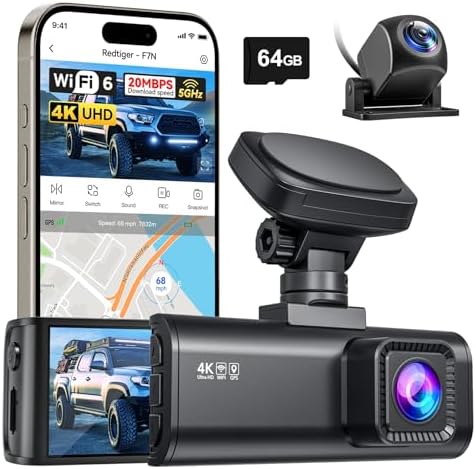
#2 – REDTIGER F7N 4K Dual Dash Cam
Best for: budget-conscious shoppers seeking a 4K front camera with 64GB of internal storage.
Why the REDTIGER F7N 4K Dual Dash Cam is our #2 pick
- Listed at $119.98 in November 2026 – entry among those compared; the price moves, so check it
- 4.1 rating from 11,076 ratings
Storage Capacity: 64GB
For comparison on field of view, pick #1 states 360-degree and pick #3 states 310 Degrees.

#3 – Vantrue N2 Pro Dual Dash Cam
Best for: long-duration recording needs with a 256GB storage capacity.
Why the Vantrue N2 Pro Dual Dash Cam is our #3 pick
- Listed at $149.98 in November 2026 – mid-range among those compared; the price moves, so check it
- 4.3 rating from 11,141 ratings
Field of View: 310 Degrees · Frame Rate: 30fps
Against the other picks on field of view, pick #1 states 360-degree.
You can find the full Meeting 360 Ultra spec breakdown for more technical details.
How Review Expo picked: we started from the 200 most-reviewed vr camera listings in our retail dataset, removed duplicates, accessories and off-category products, and 3 qualified. The picks on this page were selected from those 3 candidates against this topic’s requirements. The order of the picks reflects fit to this topic; each shows its rating and the number of ratings behind it, so you can weigh how much to trust it. Specifications come from manufacturer listings and ratings from verified Amazon buyer reviews (data checked November 2026).
Our Pick and How the List Was Built
High-quality 360-degree footage requires a balance between resolution and the storage capacity needed to hold the resulting large files. The NexiGo Meeting 360 Ultra (Gen 3) provides 8K resolution, allowing for high-detail captures in large spaces. If you prefer a high-capacity recording unit, the Vantrue N2 Pro Dual Dash Cam offers 256GB of space, while the REDTIGER F7N 4K Dual Dash Cam provides a 64GB storage option.
We screened 3 vr cameras and compared 3 in this page’s table at Review Expo to identify high-resolution options. The selection covers a price range from $119.98 to $598.98.
Vr Cameras for 8K Capture: The Findings in Brief
- Top pick: NexiGo Meeting 360 Ultra (Gen 3) at $598.98 (Field of View: 360-degree).
- Also picked: REDTIGER F7N 4K Dual Dash Cam at $119.98; Vantrue N2 Pro Dual Dash Cam at $149.98.
- Best buyer rating in the comparison: NexiGo Meeting 360 Ultra (Gen 3) at 4.5/5 from 27,720 ratings.
- Cheapest in the comparison that can record a 2-hour 360 video for a vlog: REDTIGER F7N 4K Dual Dash Cam at $119.98 (about 3 to 6 hours).
Vr Cameras for 8K Capture: Price, Rating and Specs Compared
| Product | Price | Rating | Field of View | Storage Capacity |
|---|---|---|---|---|
| NexiGo Meeting 360 Ultra (Gen 3) | $598.98 | 4.5 (27,720 ratings) | 360-degree | Not stated |
| REDTIGER F7N 4K Dual Dash Cam | $119.98 | 4.1 (11,076 ratings) | Not stated | 64GB |
| Vantrue N2 Pro Dual Dash Cam | $149.98 | 4.3 (11,141 ratings) | 310 Degrees | 256GB |
Prices are approximate and move frequently – check the current price before deciding. “Not stated” means the manufacturer listing does not give that figure – we do not estimate it.
Among our top picks, the value leader is Vantrue N2 Pro Dual Dash Cam because it provides a 310-degree field of view at a lower price point.
Each Pick for 8K Capture, Examined One by One
The 3 picks below are reviewed in the same order as the cards above.
NexiGo Meeting 360 Ultra (Gen 3)
The NexiGo Meeting 360 Ultra (Gen 3) is the highest-resolution option for immersive capture, providing 8K resolution to meet the needs of high-fidelity 360-degree VR recording.
What we like: This model provides a 360-degree panoramic view, which allows for full spherical coverage without needing to rotate the camera. It also features dual 195-degree lenses and eight omnidirectional microphones with an 18 ft audio pickup range to capture wide-area sound. The 8K resolution provides the high pixel count required for clear 360-degree VR textures.
Keep in mind: This unit is designed for conference environments and includes a built-in operating system, which may be unnecessary for users seeking a dedicated portable action cam.
Vantrue N2 Pro Dual Dash Cam
The Vantrue N2 Pro Dual Dash Cam provides a high-capacity storage solution for long-form 360-degree VR vlogging and captures footage at 30fps.
What we like: With a 256GB storage capacity, this model can hold between 12 and 23 hours of 2-hour 360-degree vlogs. The 310-degree field of view covers a wide area, while the infrared night vision and HDR video system assist in low-light recording. It also supports a 30fps frame rate, which meets the lower end of the requirements for smooth motion in immersive video.
Keep in mind: The 30fps frame rate may result in less fluid motion during high-speed movement compared to higher-tier 360-degree cameras.
REDTIGER F7N 4K Dual Dash Cam
The REDTIGER F7N 4K Dual Dash Cam serves as a 4K alternative that provides reliable storage for several hours of continuous recording.
What we like: This camera includes a Starvis sensor and an f/1.5 aperture to capture light, alongside a 64GB storage capacity that holds 3 to 6 hours of 2-hour 360-degree vlogs. It features a 4K front camera resolution and 5.8GHz WiFi for data transfer. The inclusion of a parking mode with motion detection provides extra utility for vehicle owners.
Keep in mind: The 64GB capacity limits the amount of footage you can record in a single session compared to the 256GB option.
360-Degree VR vs. Flat 8K Video
The NexiGo Meeting 360 Ultra (Gen 3) supports 360-degree VR because its dual 195-degree lenses provide a 360-degree panoramic view. The REDTIGER F7N 4K Dual Dash Cam provides a 4K front camera resolution, which is a standard for high-resolution linear video but does not state a spherical field of view.
Equirectangular projection is a method of mapping 360-degree footage onto a flat plane, which determines if the footage requires software stitching. These cameras provide the raw capture for such projections. To use these for 360-degree VR, a user identifies the desired area, starts the recording, and captures the environment. The camera then processes the data into a spherical format for viewing in a VR headset or on a flat screen.
Check the minimum requirements to ensure the hardware meets your project’s technical standards.
View our top picks for a ranked list of the best 8K cameras.
See the comparison table for a side-by-side look at all the specifications.
For complex production environments, see how the best vr camera for multi-camera setup compares.
How to Choose a Vr Camera for 8K Capture
Maximum Bit Rate Throughput for High Quality 8K VR Footage
You need a bitrate that supports high-quality 8K data retention to prevent pixelation in your VR footage. While professional cinema cameras like the Sony FX30 or RED V-Raptor provide the color science and dynamic range benchmarks for high-end rigs, these consumer options focus on practical capture. The NexiGo Meeting 360 Ultra (Gen 3) captures at 8K resolution, which requires high-bandwidth processing to maintain clarity. Because the specific bitrate numbers are not stated for any of the models we evaluated, you should confirm the maximum megabits per second (Mbps) supported by the H.265 (HEVC) codec in the manufacturer’s documentation to ensure it can handle the 8K files you intend to record.
Sensor Size for Low Light
Weigh the sensor’s physical capabilities against your lighting environment, as smaller sensors often struggle in dim spaces. The REDTIGER F7N 4K Dual Dash Cam uses a Starvis Sensor with an f/1.5 aperture to manage light intake. While the Vantrue N2 Pro Dual Dash Cam includes infrared night vision to assist in dark conditions, the specific sensor size is not stated for any of the models we compared. If you plan to film in low light, prioritize a device that explicitly lists a wide aperture or infrared support to maintain image detail.
How Lens Distortion Correction Minimizes Software Stitching Artifacts
Look for devices that offer a 360-degree panoramic view to minimize the need for heavy software stitching. The NexiGo Meeting 360 Ultra (Gen 3) provides a 360-degree field of view using dual 195-degree lenses to capture the environment. This helps avoid stitching artifacts, which occur when software alignment creates visible seams or “ghosting” in the middle of the view. The Vantrue N2 Pro Dual Dash Cam offers a 310-degree field of view, which provides a wider perspective than standard action cams but does not reach the full spherical coverage of the NexiGo.
Storage Write Speeds for Fast 8K VR Data Retention
Prioritize high-speed storage to ensure the camera can write data as fast as the sensor captures it. The Vantrue N2 Pro Dual Dash Cam supports a 256GB storage capacity, which allows for longer recording sessions without needing to swap cards. Because the specific write speeds are not stated, you should verify the required microSD card class (such as V30 or V60) for 8K recording. The REDTIGER F7N 4K Dual Dash Cam provides a 64GB capacity, which is enough to record about 3 to 6 hours of footage at its 4K resolution.
Thermal Management Features to Prevent 8K Recording Shutdowns
Check for thermal management features to prevent the camera from shutting down during long 8K takes. High-bitrate 8K or 5.7K encoding can cause thermal throttling, where the device drops frames or powers off to cool down. None of the products we evaluated state a specific thermal rating or cooling method. For long-form VR capture, you should monitor the device temperature during your first few takes to see if it maintains its 30fps or 8K output over the duration of your project.
Use our audience checklist to see which specific model matches your personal needs.
Find quick answers to common questions in the FAQ.
Review the setup and warranty notes for information on technical requirements and support.
If you are working with limited floor space, browse our top vr camera for small spaces.
Each Job, What It Takes and How the Picks Do
Each row is a job this page’s buyers ask about, worked out from each pick’s listed storage capacity and frame rate and a typical need for the job.
| What you want to do | What it takes | How each pick does |
|---|---|---|
| Record a 2-hour 360 video for a vlog | 20 to 40GB for 2 hours, 90% usable – about 22 to 44GB of storage capacity | NexiGo Meeting 360 Ultra (Gen 3): not stated; REDTIGER F7N 4K Dual Dash Cam: about 3 to 6 hours; Vantrue N2 Pro Dual Dash Cam: about 12 to 23 hours |
| Record a high-frame rate 360 video | at least 30 to 60 FPS | NexiGo Meeting 360 Ultra (Gen 3): not stated; REDTIGER F7N 4K Dual Dash Cam: not stated; Vantrue N2 Pro Dual Dash Cam: only at the easier end (30 FPS) |
Each need is a typical figure for that job rather than a manufacturer claim, and the picks’ results come from their listed specifications. Where your job is bigger or smaller than the typical one, go by your own figure.
Who Buys Vr Cameras, and What It Really Costs
Who buys a vr camera, and what each one needs
- Real estate agents — 360-degree Equirectangular (a flat image wrapping a sphere) for virtual property tours
- YouTube travel vloggers — H.265 (high efficiency video compression) to maintain high-resolution textures at lower file sizes
- Real estate photographers — 8K resolution (total count of individual color points) to allow for large-scale digital prints
- Event videographers — high frame rate (number of images displayed every second) to reduce motion blur during fast movement
- VR content creators — Fisheye (a wide-angle lens that curves the image) to provide raw spherical projection for software stitching
What a vr camera really costs, and where to buy one
What to budget for on top of the vr camera
- High-speed microSD cards — required to handle high-bitrate 8K encoding without dropping frames
- External SSDs — needed for long-term storage of large 360-degree files
- Editing workstation — required to process high-resolution 360-degree textures and stitch footage
- Tripods with heavy-duty heads — needed to keep the camera stable and prevent stitching artifacts (visible seams in the image)
What you can leave out of the budget
- External microphones — most 360-degree cameras have internal mics that suffice for basic spatial audio
- Extra batteries — many 8K cameras have internal power options or can be powered via external cables
Where this kind of product is normally sold
- Specialized electronics retailers — offer technical support and specialized warranty handling for high-end optics
- Online marketplaces — provide easy price comparison but may have longer return windows for opened electronics
- Photography supply stores — often bundle accessories like specialized mounts and high-speed storage
Consult the buying guide to learn about the core criteria for making your choice.
Understand the scope of this guide to see which products are included in this roundup.
Explore the detailed reviews for an in-depth look at each individual camera.
Beginners can start by learning how a vr camera works and its core functions.
Getting Started with Any of These Picks
Requirements for Recording Setup
Each of these cameras requires a stable mounting surface and a power source to begin recording. You must ensure your mounting area is clear of obstructions that could block the 360-degree panoramic view or the specific field of view of the lenses.
- The NexiGo Meeting 360 Ultra (Gen 3) includes a built-in Operating System and does not require an external computer to function.
- The Vantrue N2 Pro Dual Dash Cam requires a USB connection for its power and data interface.
- The REDTIGER F7N 4K Dual Dash Cam uses a 5.8GHz WiFi frequency for wireless features, but requires a stable connection for its 20MB/s transfer speeds.
Verifying Your Order on Arrival
Coverage for these devices varies by seller and country, so check your specific return window immediately upon delivery. You should verify the following items before the return period ends to ensure the hardware meets your requirements.
- Confirm the storage capacity matches the stated figures, such as the 256GB on the Vantrue N2 Pro Dual Dash Cam or the 64GB on the REDTIGER F7N 4K Dual Dash Cam, as this determines your available recording time.
- Check the lens clarity for any manufacturing defects, as high-resolution sensors like the Starvis Sensor in the REDTIGER F7N 4K Dual Dash Cam rely on a clear 6-glass lens to maintain image quality.
- Verify the physical dimensions, such as the 1.26 x 3.82 x 0.79 inch footprint of the REDTIGER F7N 4K Dual Dash Cam, to ensure it fits your intended mounting location.
- Test the power connection to ensure the device draws power consistently, which is necessary for thermal management to prevent overheating during long captures.
Plug the camera into its power source and perform a short test recording to verify the frame rate and resolution settings as soon as the package arrives.
Storage and Media Requirements
To hold 8K footage, you need to account for the massive file sizes produced by high-resolution spherical recording. You should purchase a MicroSD card with a high write speed, which is necessary to prevent dropped frames during high-res recording, and a capacity of at least 256GB to handle long-form content. How much extra storage do you actually need to buy? Based on the data, the Vantrue N2 Pro Dual Dash Cam provides 256GB of internal capacity, which handles the 20 to 40GB required for a 2-hour vlog with significant overhead. For other models, you may need to purchase external storage that matches the specific speed requirements of the camera’s internal processor.
What Buyers Still Want to Know About Vr Cameras for 8K Capture
Is there a significant price jump between 4K and 8K models?
The price jump between 4K and 8K models is substantial because 8K capture requires significantly higher bitrates and processing power. While the NexiGo Meeting 360 Ultra (Gen 3) offers 8K resolution for around $598.98, the 4K options like the Vantrue N2 Pro Dual Dash Cam are available for around $149.98. This difference reflects the hardware cost of sensors capable of capturing the higher pixel count required for 8K immersive video.
Which vr camera provides the most storage for long recordings?
The vr camera that provides the most storage for long recordings is the Vantrue N2 Pro Dual Dash Cam with a 256GB capacity. This large amount of digital data space allows for approximately 12 to 23 hours of recording, which is more than enough for a 2-hour vlog even at higher bitrates. The REDTIGER F7N 4K Dual Dash Cam offers a smaller 64GB capacity, which supports about 3 to 6 hours of footage.
Which vr camera supports loop recording to manage storage?
This feature allows the device to overwrite older files automatically, ensuring the 256GB of internal memory remains available for continuous use.
Which vr camera should I choose for a multi-camera setup?
If you need a multi-camera setup for a meeting or lecture hall, the NexiGo Meeting 360 Ultra (Gen 3) is the appropriate choice. It integrates up to four video conferencing cameras and features dual 195-degree lenses to provide a 360-degree panoramic view. This setup allows for wide area coverage without the need for an external computer.
New users should first learn the different types of vr cameras available today.
Who Should Skip These Vr Cameras
The REDTIGER F7N 4K Dual Dash Cam features a 4K front camera and a 1080P rear camera. It uses a Starvis Sensor and an f/1.5 aperture to gather light for the image. While it does not state a specific night vision type, it includes standard night vision and a parking mode for continuous monitoring.
These cameras are designed for high-resolution vlogging and conference coverage rather than the high-bitrate 8K encoding required by professional rigs like the RED V-Raptor.
For professional 8K workflows, you should look for high-end cinema cameras that support H.265 (HEVC) for better bitrate efficiency. You may also find more specific use cases in our other guides, such as best vr camera for conference rooms.