
ReviewExpo is reader-supported: some links on this page are affiliate links, and as an Amazon Associate ReviewExpo earns from qualifying purchases at no extra cost to you. Learn more.
Vr cameras come in three distinct types defined by how they capture 360-degree imagery: single-lens systems, dual-lens systems, and multi-camera arrays. The primary dimension separating these types is the method of image stitching, which dictates whether the camera requires significant software processing to align the view or relies on physical lens overlap. You need to decide between the simplicity of a single-lens system and the high-fidelity output of multi-camera arrays based on your required resolution and the speed of your movement. Measure the required output resolution and the expected speed of your subjects to determine which capture method avoids stitching artifacts or rolling shutter distortion.
Single Lens Vr Camera Systems
Single lens vr camera systems use a single wide-angle lens to capture a spherical view, often utilizing fisheye optics to pull the surrounding environment into a single frame. These systems are designed for users who prioritize portability and ease of use over extreme high-resolution textures. Because the entire 360-degree sphere is compressed into one image, these cameras often require more intensive software processing to “unwarp” the footage for viewing.
Single lens vr cameras offer compact designs for head-mounted use
The main advantage of a single lens vr camera is its compact form factor, making it suitable for head-mounted configurations where weight and balance are critical. However, these systems often give up image clarity at the edges of the frame compared to multi-lens setups. They typically sit in the lower price band of the market, offering an entry point for those who need immersive footage without professional-grade requirements.
If you are working with limited room, browse our selection of the best vr camera for small spaces.
If you are filming a stationary subject or a slow-moving tour, a single lens vr camera provides a sufficient result. The risk of choosing the wrong type here is a loss of time during post-production if the software cannot effectively stitch the extreme wide-angle distortion into a usable format.
Where these choices show up in our reviews
Prices across these 3 run from $119.98 to $598.98; each one has a full review here.
New users should look at our guide on the best vr camera for beginners.


Dual Lens Vr Camera Systems
Dual lens vr camera systems use two separate lenses positioned at specific angles to capture overlapping fields of view. These systems are for users who require a balance between image stability and high-resolution output, often used in action-oriented 360-degree videography. By capturing two overlapping halves of the sphere, the software can blend the images together to create a seamless 360-degree texture.
Dual lens vr camera systems provide reliable stitching and mid-range pricing
Dual lens vr camera systems offer better stabilization and stitching reliability than single-lens options because the software has more data to work with for each side of the sphere. They give up the extreme compactness of a single-lens unit, as the physical housing must accommodate two distinct lenses. These systems generally occupy the mid-range price band, providing a standard for most consumer-grade immersive video.
To understand the underlying technology, see how a vr camera works in our introductory guide.
Dual lens vr camera overlap reduces stitching artifacts during fast movement
When you move quickly with a dual lens vr camera, the overlap between the two lenses helps reduce stitching artifacts, which are visible seams caused by poor software alignment. This setup is the standard for most “action cam” style 360-degree devices. If you select a dual-lens system for a high-speed application, you ensure that the software has enough overlapping data to maintain a cohesive view during rapid rotation.
Multi Camera Vr Camera Arrays
Multi camera vr camera arrays consist of three or more lenses arranged in a circle to capture the environment simultaneously. These are for professional creators who require the highest possible resolution and the most accurate color science for high-end rigs. By distributing the capture across multiple lenses, these systems can achieve high-resolution textures that do not rely on heavy digital upscaling.
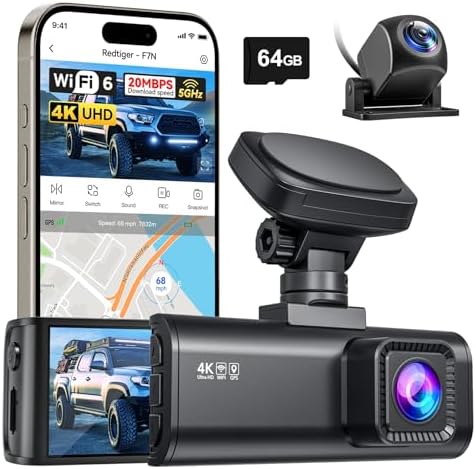
Our data-driven analysis covers the REDTIGER F7N spec breakdown in detail.
Multi camera vr camera arrays deliver superior clarity and high-end pricing
Multi camera vr camera arrays provide superior image clarity and a more natural perspective because each lens covers a smaller, more manageable portion of the sphere. They give up portability and simplicity, often requiring a larger mounting rig and more complex synchronization of the individual camera sensors. These systems sit in the highest price band of the market.
Multi camera vr camera arrays provide 8K output and professional fidelity
Professional cinema cameras like the Sony FX30 or RED V-Raptor provide the color science and dynamic range benchmarks for high-end rigs, and multi-camera arrays are the only consumer-accessible way to approach that level of fidelity in a 360-degree format. In these systems, the primary limitation is often thermal throttling, where high-bitrate 8K or 5.7K encoding causes the camera to shut down during long takes. If you require 8K output for a professional project, a multi-camera array is the only configuration that provides sufficient pixel count to avoid a blurry experience.
You can find our full analysis of how the Vantrue N2 Pro performs on our site.
Vr Camera Type Comparison
| Vr Camera Type | Best-Fit Buyer | Main Advantage | Main Compromise |
|---|---|---|---|
| Single Lens | Head-mounted users | Portability | Lower resolution |
| Dual Lens | Action videographers | Stabilization | Medium footprint |
| Multi Camera | Professional creators | High resolution | Large size/Cost |
How to Tell Which Vr Camera Type You Need?
How to tell which vr camera type you need depends on your specific movement speed and the final destination of your footage. If you are mounting the camera to a helmet and need to keep your hands free, a single lens vr camera is the most practical choice for its compact size. You should prioritize a single lens system when the weight of the device is the primary constraint on your mobility.
Dual lens vr camera overlap minimizes rolling shutter distortion in sports
If you are recording high-speed sports or fast-moving vehicles, you should look for a dual lens vr camera. The overlapping field of view between the two lenses provides the necessary data to minimize rolling shutter distortion, which is when fast movement causes the 360-degree image to warp or jitter. You need the dual-lens overlap to ensure the footage remains stable during rapid changes in direction.
Learn about the imaging capabilities in our NexiGo Meeting 360 Ultra comparison.
Multi camera vr camera arrays provide the highest visual fidelity for 8K
If your goal is to produce 8K content for professional distribution or high-end immersive experiences, a multi camera vr camera array is the requirement. While the other types might struggle to produce sharp 8K textures, a multi-camera array distributes the load across several sensors to maintain clarity. If you require the highest possible visual fidelity and do not need to mount the camera to a small head-mounted rig, the multi-camera array is the correct choice.