
ReviewExpo is reader-supported: some links on this page are affiliate links, and as an Amazon Associate ReviewExpo earns from qualifying purchases at no extra cost to you. Learn more.
Cinema cameras are available in four price tiers ranging from $1095 to $8399.95, where the primary change as costs increase is the availability of 10-bit 4:2:2 internal recording and higher frame rates.
Cinema Camera Price Levels at a Glance
| Price level | Price range | Products | Median rating |
|---|---|---|---|
| Entry level | $1095 to $1295 | 4 | 4.6 |
| Lower mid-range | $1499 to $2996.35 | 4 | 4.3 |
| Upper mid-range | $3011.45 to $5214.95 | 4 | 5.0 |
| Top end | $5898 to $8399.95 | 5 | 3.5 |
Products in this category with a full review here
From $1099 to $8399.95: 3 of the 6 in this category we have reviewed in full.


What does an entry level cinema camera offer?
An entry level cinema camera provides a starting point for filmmaking with a median price of $1099. At this price point, you can expect a median frame rate of 98 fps and a median buyer rating of 4.6.
Entry level cinema cameras offer high frame rates but limited color depth
This level suits creators who need to move beyond standard video formats but do not require high-end color grading flexibility. While 2 of the 4 products in this bracket support 120fps at 4K resolution, only 1 of the 4 supports the 10-bit 4:2:2 internal recording standard. This means that while you can capture smooth motion, you may face limitations in color depth when editing professional-grade footage.
Beginners can start by learning how a cinema camera works and its core functions.
Choosing this level means you give up the consistent 10-bit 4:2:2 recording found in higher tiers. If your workflow requires extensive color grading in post-production, the lack of this standard in most entry-level options can create a bottleneck for your final image.
What does a lower mid-range cinema camera offer?
A lower mid-range cinema camera offers a significant jump in internal data handling with a median price of $2244.20. This tier provides a median bit depth of 11 bit and a median buyer rating of 4.3.
Mid-range filmmaking cameras provide 10-bit 4:2:2 recording for professional grading
This level suits independent filmmakers who need reliable color depth for professional workflows. Unlike the entry level, 4 of the 4 products in this range support 10-bit 4:2:2 internal recording. This standard provides the necessary data for high-dynamic-range workflows, ensuring that highlights and shadows retain detail during the grading process.
Understanding how to choose your sensor size is vital for achieving the right depth of field.
You trade off the higher frame rates found at the top of the market for these internal recording capabilities. While 1 of the 4 options reaches 120fps at 4K resolution, the primary value here is the consistent 10-bit 4:2:2 support that defines the mid-range jump.
What does an upper mid-range cinema camera offer?
An upper mid-range cinema camera provides a balance of high-end features and performance with a median price of $4648.98. These units typically feature a median buyer rating of 5.0.
This level suits production houses that require a reliable workhorse capable of high-quality output. This ensures that the camera can handle demanding color science requirements without data degradation.
Upper mid-range cinema cameras limit high-speed 4K capture options
The primary trade-off at this level is the limitation on high-speed capture. Only 1 of the 4 products in this range reaches 120fps at 4K resolution. If your project requires constant high-speed slow motion, you may find the upper mid-range limits your options compared to the top end.
You can view our spec breakdown of the Sony FX6 to see its internal capabilities.
What does a top end cinema camera offer?
A top end cinema camera provides the highest performance metrics available, with a median price of $6699. This tier features a median frame rate of 120 fps and a median bit depth of 10 bit.
High-end cinema cameras provide maximum frame rates and color depth
This level suits high-end commercial and feature film productions where every technical specification is pushed to its limit. At this price point, 4 of the 5 products support a 120 fps frame rate, and 2 of the 2 products that state it reach 120fps at 4K resolution. Additionally, 4 of the 5 products support 10-bit 4:2:2 internal recording.
You are paying for the guarantee of high-speed performance and the highest data reliability. While the bit depth remains at 10-bit, the consistency of these features across the most expensive models ensures that the camera will not fail to meet the requirements of large-scale productions.
See how the Sony FX6 kit performs compared to other bundled options.
Where does paying more stop buying more?
The point where the gain flattens depends on whether your priority is color depth or frame rate. For those requiring 10-bit 4:2:2 internal recording, the jump from entry level to lower mid-range is the most decisive move, as 4 of the 4 products in that tier achieve this standard.
The transition from upper mid-range to top end focuses almost entirely on high-speed performance. While the upper mid-range offers 10-bit 4:2:2 recording, only 1 of those 4 products reaches 120fps at 4K resolution.
Conversely, if your work requires 120fps at 4K resolution, the gain remains sharp at the top end. Since only 2 of the 5 products in the highest tier reach this, and only 1 of the 4 in the upper mid-range does, the top end is where the high-speed capability becomes a standard rather than an outlier.
What should you budget for on top of the camera?
Beyond the cost of the cinema camera, you must budget for essential peripherals that allow for professional operation. These prices were checked in November 2026 and retail prices move, so these figures are approximate.
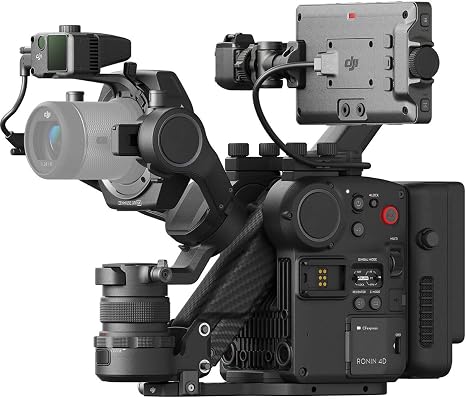
View our data-driven analysis of how the Ronin 4D-6K performs in production.
You will need a V-Mount Battery to provide extended power for long production days. Because these batteries are large, you must ensure the mounting plate matches the specific mounting points on your camera body.
A Field Monitor is necessary for precise focus and exposure checking. You must verify that the monitor’s input ports, such as HDMI or SDI, match the output ports on your cinema camera to ensure a stable signal.
Finally, a Media Card is required to store the recorded footage data. Because high-bitrate 10-bit 4:2:2 recording generates large files, you must ensure the card’s write speed meets the camera’s maximum output to avoid a bitrate bottleneck, which occurs when the card cannot sustain the camera’s data rate resulting in dropped frames.
Learn more about the capabilities of the Sony FX3 spec breakdown for mirrorless workflows.
How can you tell if a cinema camera price is fair?
A fair price in this category is determined by the price per unit of the deciding specification relative to the medians. If you require 10-bit 4:2:2 internal recording, compare the price of the camera to the lower mid-range median of $2244.20.
If you require 120fps at 4K resolution, you should compare the price against the top end median of $6699. By calculating the price per unit of these specific features, you can see if a product is priced fairly based on what it actually provides.
For example, if a camera offers 120fps at 4K resolution but is priced significantly below the $6699 median, it represents a high value for high-speed requirements. If a camera lacks 10-bit 4:2:2 recording but is priced near the lower mid-range, the price is not supported by the data provided by the category’s performance standards.
The rest of our cinema camera guides
- Best Cinema Cameras for 4K Video
- Cinema Cameras for 6K Video Under $3000 Compared
- Choosing the Best Cinema Camera for Handheld Shooting
- Capturing Cinematic Footage for YouTube Content With a Cinema Camera
- Which Cinema Camera Works Best for Professional Wedding Videography?
- The Cinema Cameras That Provide High Dynamic Range Video for Commercial Ads Under $8500