
ReviewExpo is reader-supported: some links on this page are affiliate links, and as an Amazon Associate ReviewExpo earns from qualifying purchases at no extra cost to you. Learn more.
Our Top 3 Picks for Gimbal Use
The best cinema camera for gimbal stabilization is the DJI Ronin 4D-6K which integrates a 4-axis gimbal to stabilize footage for professional filmmakers needing a unified hardware solution.
We went through 10 Cinema Camera options to build this list. These 3 are the ones worth your time.
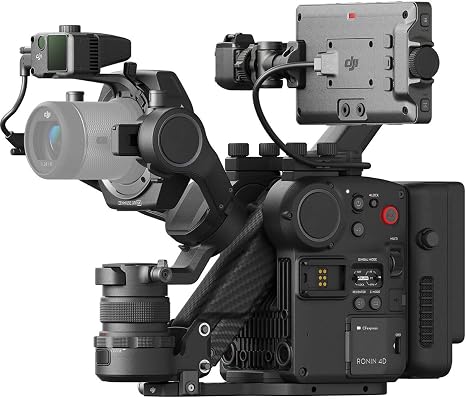
#1 – DJI Ronin 4D-6K
Best for: filmmakers who need a gimbal-native system with integrated LiDAR focusing and wireless transmission.
Why the DJI Ronin 4D-6K is our #1 pick
- Listed at $6699 in November 2026 – premium among those compared; the price moves, so check it
- 3.5 rating from 6 ratings
Frame Rate: 120 fps
Against the other picks on frame rate, pick #3 states 120p.

#2 – Blackmagic Design Pocket Cinema Camera 6K EF Mount
Best for: users seeking a high-performance, budget-friendly body that records RAW footage and supports 120 fps.
Why the Blackmagic Design Pocket Cinema Camera 6K EF Mount is our #2 pick
- Listed at $1099 in November 2026 – entry among those compared; the price moves, so check it
- 4.5 rating from 350 ratings
Frame Rate: 120 fps · Sensor Size: 23 10 x 12 99 millimeter
To put that frame rate in context, pick #3 states 120p.

#3 – Sony ILME-FX3 Full-Frame Cinema Camera
Best for: creators who require a compact-pro setup with 10-bit 4:2:2 internal recording and active cooling.
Why the Sony ILME-FX3 Full-Frame Cinema Camera is our #3 pick
- Listed at $4298 in November 2026 – mid-range among those compared; the price moves, so check it
- 5.0 rating from 1 ratings
Frame Rate: 120p · Bit Depth: 10-bit
For comparison on frame rate, pick #1 states 120 fps and pick #2 states 120 fps.
Learn about the specific capabilities of the Z CAM E2C spec breakdown to see if it fits your workflow.
How Review Expo picked: we started from the 200 most-reviewed cinema camera listings in our retail dataset, removed duplicates, accessories and off-category products, and 17 qualified. The picks on this page were selected from those 17 candidates against this topic’s requirements. The order of the picks reflects fit to this topic; each shows its rating and the number of ratings behind it, so you can weigh how much to trust it. Specifications come from manufacturer listings and ratings from verified Amazon buyer reviews (data checked November 2026).
What We Recommend and Why
Smooth, stabilized motion requires a camera capable of maintaining high frame rates without sacrificing the resolution needed for professional color grading. Achieving fluid slow motion depends on the hardware’s ability to process high-speed data consistently during active gimbal movement.
The DJI Ronin 4D-6K enables this by supporting 120 fps, providing the necessary headroom for high-quality slow motion. You should consider the Blackmagic Design Pocket Cinema Camera 6K EF Mount if you need RAW recording capabilities, or choose the Sony ILME-FX3 Full-Frame Cinema Camera if your workflow relies on 10-bit 4:2:2 internal recording.
Our team screened 17 cinema cameras and compared 10 models here at Review Expo to find these picks. These selections cover a price range from $1099 to $6699, and the median price of the 10 products in our comparison is $3003.90.
Find the minimum requirements to ensure your gear meets professional standards.
Visit the FAQ to get answers to common technical questions.
Read the detailed reviews for an in-depth breakdown of every camera mentioned.
Consider the value of the Amazon Renewed Sony FX6 review if you are looking for a certified used option.
Cinema Cameras for Gimbal Use: The Findings in Brief
- Top pick: DJI Ronin 4D-6K at $6699 (Frame Rate: 120 fps).
- Also picked: Blackmagic Design Pocket Cinema Camera 6K EF Mount at $1099; Sony ILME-FX3 Full-Frame Cinema Camera at $4298.
- We compared 10 Cinema Cameras, from $1095 to $6699, median $3003.90.
- Best buyer rating in the comparison: Blackmagic Design Pocket Cinema Camera 6K Pro at 5.0/5 from 28 ratings.
- Not covered by these picks: Cinema-grade footage with high-end color science – needs ARRI Alexa 35 dynamic range, and none of the picks reaches it.
- Cheapest in the comparison that can record a 10-minute 4K slow motion clip: Blackmagic Design Pocket Cinema Camera 4K at $1095 (120 fps).
Full Comparison Table of Filmmaking Cameras for Gimbal Use
| Product | Price | Rating |
|---|---|---|
| DJI Ronin 4D-6K | $6699 | 3.5 (6 ratings) |
| Blackmagic Design Pocket Cinema Camera 6K EF Mount | $1099 | 4.5 (350 ratings) |
| Sony ILME-FX3 Full-Frame Cinema Camera | $4298 | 5.0 (1 ratings) |
| Blackmagic Design Pocket Cinema Camera 4K | $1095 | 4.6 (156 ratings) |
| Solid Signal Blackmagic Design Pocket Cinema Camera 4K | $1295 | 4.6 (42 ratings) |
| Blackmagic Design Pocket Cinema Camera 6K Pro | $3011.45 | 5.0 (28 ratings) |
| Blackmagic Design Cinema Camera 6K L Mount | $2996.35 | 4.3 (27 ratings) |
| Z CAM E2C | $1099 | 4.8 (10 ratings) |
| Sony FX3 Full-Frame Cinema Camera | $6696 | 0.0 (0 ratings) |
| Sony FX3A Full-Frame Cinema Camera | $5898 | 0.0 (0 ratings) |
Prices are approximate and move frequently – check the current price before deciding.
Among our top picks, the value leader is Blackmagic Design Pocket Cinema Camera 6K EF Mount because it provides 120 fps at the $1099 price point.
The Full Review of Each Pick for Gimbal Use
The 3 picks below are reviewed in the same order as the cards above.
DJI Ronin 4D-6K
The DJI Ronin 4D-6K is the primary choice for gimbal-native workflows because it integrates the 4-axis gimbal and the X9-6K camera into a single modular system. This eliminates the need for external balancing and allows for Z-Axis stabilization, which compensates for vertical movement during handheld operation.
What we like: This system supports 120 fps, which is the threshold for high-quality slow motion without significant resolution loss. It also features LiDAR focusing, a system that uses light pulses to map depth for faster focus in low-lit environments, and 14 plus stops of dynamic range for high-contrast scenes.
Keep in mind: The unit weighs 10.27 pounds, which may be heavy for solo operators who need to move quickly between setups without a support team.
Blackmagic Design Pocket Cinema Camera 6K EF Mount
The Blackmagic Design Pocket Cinema Camera 6K EF Mount provides a high-performance, compact body that is easy to mount on standard stabilized rigs. It offers a professional-looking cinematic look on a budget, as it provides 120 fps for slow motion at the $1099 price point.
What we like: This camera records in RAW, a format that offers maximum data flexibility during the color grading process. It also captures at 120 fps, allowing you to record a 10-minute 4K slow motion clip if your storage can sustain the bitrate.
Keep in mind: The sensor size is 23.10 x 12.99 mm, which is smaller than full-frame sensors and may affect your preferred depth of field.
Sony ILME-FX3 Full-Frame Cinema Camera
The Sony ILME-FX3 Full-Frame Cinema Camera is the best all-rounder for solo operators who need to switch between modes quickly. Its compact design and Active Mode stabilization—a system that uses internal processing to smooth out high-frequency vibrations—make it highly versatile for rapid transitions.
What we like: This model features 10-bit 4:2:2 internal recording, which is the minimum requirement for professional color grading and high-dynamic-range workflows. It also offers 4K recording at 120p and includes an active fan to prevent thermal throttling, which is when the camera shuts down due to heat.
Keep in mind: The camera does not state a specific weight, so you should verify the total weight with your specific gimbal’s payload limit before ordering.
To decide which camera fits your workflow, identify your primary filming environment. If you work in high-contrast outdoor lighting, the 14 plus stops of dynamic range on the DJI Ronin 4D-6K provides more flexibility. If you prioritize a lightweight setup for solo work, the 1.98-pound weight of the Blackmagic Design Pocket Cinema Camera 6K EF Mount makes it easier to manage on a small rig.
See which camera fits your specific needs in our audience checklist.
Consult the buying guide to understand the core criteria for a gimbal-ready body.
View the comparison table to see technical specifications side by side.
If your project requires more stability than a stabilizer, see the top options for handheld shooting.
What to Look For in a Filmmaking Camera for Gimbal Use
Gimbal payload capacity limits and motor torque requirements
The maximum weight a gimbal can balance without motor strain is determined by the specific torque limits of the motors. For a professional setup, you need to confirm the specific payload capacity of your gimbal model, as exceeding these limits causes jitter or motor failure during long takes. The DJI Ronin 4D-6K features an integrated 4-axis gimbal design that handles its own 10.27-pound weight, while the Blackmagic Design Pocket Cinema Camera 6K EF Mount and Sony ILME-FX3 Full-Frame Cinema Camera are designed to be mounted onto external systems. Because the specific payload capacities for external rigs are not stated in the data, you must verify the motor torque limits of your specific gimbal before adding these bodies.
How camera weight distribution affects gimbal balance
Weight distribution determines how the camera sits on the gimbal arms to ensure the center of gravity remains stable. You should prioritize a compact body like the Blackmagic Design Pocket Cinema Camera 6K EF Mount, which weighs 1.98 pounds, to keep the rig balanced and reduce strain on the motors. A heavier unit like the Sony ILME-FX3 Full-Frame Cinema Camera weighs 5.37 pounds, which may require a larger gimbal with higher torque. When balancing, place the heaviest components—the camera body and lens—as close to the gimbal’s center as possible to prevent the motors from overworking. The DJI Ronin 4D-6K, weighing 10.27 pounds, manages its own distribution through a modular design that integrates the camera and gimbal into a single unit.
Active stabilization integration for smoothing high-speed movement
Active stabilization integration provides a safety net for high-speed movement by using built-in electronic image stabilization (EIS) to back up the gimbal. The Sony ILME-FX3 Full-Frame Cinema Camera states it includes Active Mode stabilization, which helps smooth out micro-jitters that a mechanical gimbal might miss. The DJI Ronin 4D-6K uses Z-Axis stabilization as part of its integrated system to maintain steady shots. For the Blackmagic Design Pocket Cinema Camera 6K EF Mount, the data does not state a figure for internal EIS, so you should rely primarily on the mechanical gimbal’s performance for this model.
Sensor shake suppression through high-speed recording capabilities
Sensor shake suppression is achieved by combining the mechanical movement of the gimbal with the camera’s internal processing. To ensure smooth motion, look for cameras that offer high-speed recording capabilities, as these allow for easier stabilization in post-production. The DJI Ronin 4D-6K, Blackmagic Design Pocket Cinema Camera 6K EF Mount, and Sony ILME-FX3 Full-Frame Cinema Camera all state they can record at 120 fps. This high frame rate allows you to capture fluid motion that can be slowed down, providing a buffer against any remaining vibrations. While the Sony Venice 2 is the standard for high-resolution full-frame production and color depth, these picks provide high-speed alternatives for gimbal-based workflows.
Physical dimensions and weight for mobile filmmaking rigs
Portability for mobile rigs depends on the physical dimensions and weight of the filmmaking camera. If you need to move quickly between locations, the Blackmagic Design Pocket Cinema Camera 6K EF Mount is the most compact option at 9.1 x 9.1 x 9.1 inches. The Sony ILME-FX3 Full-Frame Cinema Camera offers a smaller footprint of 5.1 x 3.3 x 3.1 inches, making it easier to tuck into a small bag. The DJI Ronin 4D-6K is significantly larger at 12.17 x 11.42 x 10.91 inches and weighs 10.27 pounds, which is better suited for stationary setups or heavy-duty rigs where space is less of a concern. You should weigh the weight of the camera against your transport method: a 1.98-pound body allows for a much smaller support rig than a 10-pound integrated system.
To understand different hardware configurations, see the various types of cinema cameras explained.
What Each Job Calls For vs What These Picks State
Match the job you actually need done to the figure it calls for, then check which picks state that figure or more. Where none do, the row says so.
| What you want to do | The figure it calls for | Picks at or above it |
|---|---|---|
| Smooth tracking for gimbal-mounted motion | ActiveTrack Pro or similar visual sensors | Ronin 4D-6K |
| Professional color grading for high-dynamic-range workflows | 10-bit 4:2:2 internal recording | FX3 |
| Cinema-grade footage with high-end color science | ARRI Alexa 35 dynamic range | None of these picks reach this level |
These figures are the levels this category is generally held to, not manufacturer claims. A pick at or above a figure states that number; how it reaches it and the rest of your setup still decide the job, so check them against your own workload before buying.
Who Buys Cinema Cameras, and What It Really Costs
Who buys a cinema camera, and what each one needs
- Commercial videographers — 10-bit 4:2:2 internal recording (color data for editing)
- Music video directors — 120fps at 4K resolution (high-quality slow motion)
- Independent filmmakers — ProRes/DNxHR support (optimized compressed video files)
- Content creators — Compact bodies that avoid thermal throttling (preventing camera shutdown from heat)
- Ad agencies — Low rolling shutter distortion (preventing warped images of moving subjects)
What a filmmaking camera really costs, and where to buy one
What to budget for on top of the filmmaking camera
- High-speed media cards — to avoid a bitrate bottleneck (preventing dropped frames)
- Gimbal stabilizers — to smooth out handheld movements
- External monitors — to provide a larger viewing screen for the operator
- Fast lenses — to match the sensor’s resolution and focus speed
What you can leave out of the budget
- External recorders — if the camera handles 10-bit 4:2:2 internally
- Heavy-duty cages — if the camera body is already balanced on a gimbal
Where this kind of product is normally sold
- Specialized cinema retailers — provide expert advice and specialized warranty handling
- Large electronics stores — offer easy returns and immediate physical pickup
- Online marketplaces — provide competitive pricing and wide selection of accessories
- Manufacturer direct stores — offer official bundles and direct warranty support
You can find a detailed breakdown of the Panasonic AU-EVA1 5.7K review for more technical data.
What It Takes to Run One, and What to Verify
Power distribution systems and cabling for filmmaking cameras
To keep these filmmaking cameras running during a shoot, you need a power distribution system that provides a consistent flow to the battery or internal storage.
You will need to source the correct cables and power distribution systems based on the specific model you choose. The DJI Ronin 4D-6K and Blackmagic Design Pocket Cinema Camera 6K EF Mount do not state a specific external power port in the data, so you should check the mounting interface for a standard DC input or a specialized power cable provided by the manufacturer.
Dedicated media card requirements for starting a shoot
All three selections require a dedicated media card to store the recorded footage data before you can begin filming.
- The Sony ILME-FX3 Full-Frame Cinema Camera requires high-speed storage and includes a 128GB UHS-I card in the package.
- The DJI Ronin 4D-6K and Blackmagic Design Pocket Cinema Camera 6K EF Mount do not state an included card, so you must provide your own.
- The Blackmagic Design Pocket Cinema Camera 6K EF Mount uses an EF Mount (a lens mounting standard for professional glass), while the Sony ILME-FX3 Full-Frame Cinema Camera uses a native full-frame mount; you must ensure your lenses match the specific mount of the body you select.
Verifying sensor condition and warranty terms upon arrival
Warranty coverage and return windows differ by seller and country. Confirm these details before the return window closes to protect your investment.
- Verify that the sensor and lens mount are free of surface scratches, as these are difficult to repair on high-resolution cinema sensors.
- Check that the HDMI port on the Blackmagic Design Pocket Cinema Camera 6K EF Mount and Sony ILME-FX3 Full-Frame Cinema Camera is fully functional, as this is the primary output for external monitoring.
- Confirm the weight of the DJI Ronin 4D-6K is 10.27 pounds to ensure your gimbal setup can support the load.
- Test the internal recording for the Sony ILME-FX3 Full-Frame Cinema Camera and Blackmagic Design Pocket Cinema Camera 6K EF Mount to ensure the data writes correctly to the media card.
The first thing to do the day it arrives is to perform a test recording at the maximum frame rate to verify the internal recording speed and thermal stability.
Cinema Cameras for Gimbal Use: The Questions This Choice Raises
Which filmmaking camera supports 120 fps for high-quality slow motion?
The DJI Ronin 4D-6K, Blackmagic Design Pocket Cinema Camera 6K EF Mount, and Sony ILME-FX3 Full-Frame Cinema Camera all support 120 fps. This frame rate allows for high-quality slow motion without significant resolution loss, which is the category threshold for professional results.
Which cinema camera is best for professional color grading?
The Sony ILME-FX3 Full-Frame Cinema Camera supports 10-bit 4:2:2 internal recording, which is the minimum requirement for professional color grading and high-dynamic-range workflows. This bit depth allows for a larger range of unique colors or shades per pixel during the grading process.
Is the DJI Ronin 4D-6K suitable for gimbal-integrated workflows?
Yes, the DJI Ronin 4D-6K features a 4-axis gimbal and integrated and modular design for seamless stabilization. It also includes LiDAR focusing, which helps maintain focus in low-lit environments during stabilized filming.
Which camera offers the most compact footprint for stabilized filming?
The Blackmagic Design Pocket Cinema Camera 6K EF Mount is the most compact option with a weight of 1.98 pounds. If you need to minimize the weight of your gimbal rig, this model provides a 23.10 x 12.99 mm (Super 35) sensor in a portable body.
Check the setup and warranty notes for information on accessories and manufacturer support.
Review the article scope to see exactly what models are included in this list.
Explore our top picks for a quick glance at the best-performing cameras.
If these high-end bodies are out of reach, explore cinema camera alternatives for the same results.
Who Should Skip These Filmmaking Cameras
To avoid a bitrate bottleneck, where the media card cannot sustain the camera’s maximum output resulting in dropped frames, you must verify that your storage media supports the specific bit depth and frame rate of your chosen codec. The Sony ILME-FX3 Full-Frame Cinema Camera supports 10-bit 4:2:2 internal recording, which is the minimum requirement for professional color grading and high-dynamic-range workflows. The DJI Ronin 4D-6K records in Apple ProRes, a format that balances data flexibility with an optimized compressed workflow.
If you require a cinema camera that matches the color science and dynamic range of an ARRI Alexa 35, these three picks do not meet that requirement. None of the options selected provide the specific dynamic range levels found in that industry benchmark for high-end cinema.
The rest of our filmmaking camera guides
- Choosing the Best Cinema Camera for Handheld Shooting
- Capturing Cinematic Footage for YouTube Content With a Cinema Camera
- Which Cinema Camera Works Best for Professional Wedding Videography?
- The Cinema Cameras That Provide High Dynamic Range Video for Commercial Ads Under $8500
- Best Entry-Level and Mid-Range Cinema Cameras
- Full Frame Cinema Cameras for Professional Filmmaking Compared