
ReviewExpo is reader-supported: some links on this page are affiliate links, and as an Amazon Associate ReviewExpo earns from qualifying purchases at no extra cost to you. Learn more.
Vr camera systems capture 360-degree immersive video by recording all directions simultaneously using multiple lenses or specialized sensors. A buyer needs a dedicated unit when they require high-bitrate 5.7K or 8K output for professional-grade spherical textures. You should first identify your required output resolution, as the difference between 4K and 8K determines the necessary processing power and storage speed of the hardware.
Can I use a smartphone as a vr camera?
Using a smartphone as a vr camera involves utilizing the device’s existing camera sensors and processing power to capture 360-degree content. This route costs significantly less than purchasing a dedicated unit because the hardware is already owned by the user. It beats buying a dedicated camera when the goal is casual social media content or simple 360-degree photos rather than high-fidelity cinematic video.
Smartphone sensors lack the resolution and field of view for 8K
The smartphone route stops making sense when the user requires a field of view that exceeds the standard wide-angle lens of a mobile device. Most phones cannot capture a full 360-degree sphere in a single shot without significant software stitching, which often results in visible seams or “ghosting” in the center of the frame. If you require a 5.7K or 8K resolution for large-scale displays, the sensor size on a phone will result in significant noise and lower detail compared to dedicated hardware.
Understanding technical jargon is easier when you view vr camera terms and specs explained.
Software stitching on smartphones creates blurry halos and rolling shutter
A buyer might start by trying to film a 360-degree tour of a small room using a phone and a stitching app. They often find that the software struggles to align the edges of the frames, creating a blurry “halo” effect around objects near the lens boundaries. This limitation makes the smartphone unsuitable for high-speed movement where rolling shutter distortion can warp the image.
Where these choices show up in our reviews
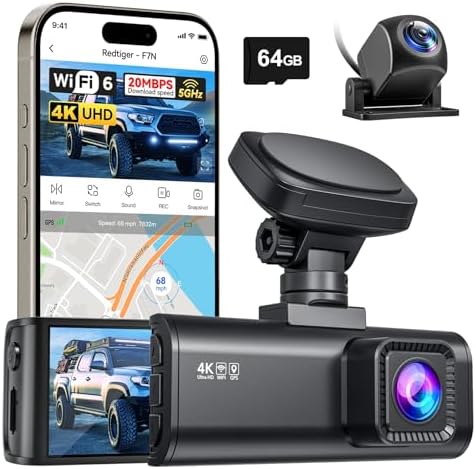
3 options shown here, $119.98 to $598.98, each with its own full review behind its name.
To understand the hardware better, see how the different types of vr cameras work.


Is buying secondhand cameras a viable vr camera option?
Buying secondhand cameras provides a route to professional-grade vr camera hardware at a lower cost than new retail prices. This option works by sourcing older models that still support high-bitrate H.265 (HEVC) encoding, which is the standard for maintaining high-resolution 360-degree textures. It beats buying new when a specific older model offers a sensor size or lens configuration that newer, more expensive models have moved away from.
Older hardware fails to maintain high bitrates without thermal throttling
The secondhand route stops making sense when the older hardware cannot handle modern high-bitrate encoding, leading to thermal throttling. If a camera cannot maintain a steady frame rate during long takes due to heat, it becomes unusable for professional work. Buyers must verify that the specific model supports the required bitrates and can maintain the desired frame rate without shutting down. A camera that cannot sustain a 5.7K output for more than five minutes is a failure point for most immersive video projects.
Learn the fundamentals by seeing how a vr camera works explained.
Previous generation cameras must support H.265 for manageable file sizes
A creator might find a previous generation professional camera that supports 8K recording but is no longer in production. While the price is lower, the user must confirm the device supports H.265 to ensure the file sizes remain manageable for 360-degree playback. If the hardware lacks this specific codec, the resulting files may be too large for standard storage or playback devices.
How do action cameras compare to vr cameras?
Action cameras serve as a common substitute for vr cameras by providing ruggedized, wide-angle recording in compact form factors. This route costs less than most high-end 360-degree units and offers superior stabilization for high-speed movement. It beats buying a dedicated vr camera when the content is intended for a single perspective rather than a full spherical view.
Our data-driven analysis provides a full review of the REDTIGER F7N.
Single lens action cameras cannot capture a full 360-degree environment
The action camera route stops making sense when the user requires a 360-degree field of view. Action cameras typically use a single wide-angle lens, meaning the user must point the camera at the subject. If the goal is to capture everything around the user without a tripod or a gimbal, an action camera cannot perform the task. The lack of multi-lens stitching means the user cannot create an immersive environment where the viewer can look in any direction.
Action cameras limit the viewer to a single first-person perspective
A mountain biker might use an action camera to capture a first-person view of a trail. While the footage is stable and clear, the viewer is limited to seeing only what is directly in front of the bike. To get a full 360-degree view of the environment, the biker would have to mount multiple cameras, which complicates the mounting and syncing process significantly.
Get a detailed overview by looking at our spec breakdown of the Vantrue N2 Pro.
Does renting equipment work for vr camera needs?
Renting equipment allows a user to access high-end vr camera hardware for a specific project without the long-term cost of ownership. This route works by paying a daily or weekly fee to a rental house for professional-grade cinema cameras and 360-degree lenses. It beats buying a dedicated unit for one-off projects, such as a single commercial or a short documentary, where the high cost of the hardware cannot be amortized over many uses.
Frequent recurring shoots make owning a vr camera cheaper than renting
Renting stops making sense when the user needs to perform frequent, recurring shoots where the cost of daily rentals exceeds the cost of owning the unit. If a user plans to produce a series of 360-degree videos every month, the cumulative rental fees will quickly surpass the purchase price of a mid-range vr camera. Furthermore, rental agreements often limit the amount of time a device can be powered on to prevent thermal damage, which may restrict the length of a single take.
See the detailed performance data in our full review of the Meeting 360 Ultra.
Renting high-end rigs provides professional 8K resolution for single projects
A production house might rent a high-end 360-degree rig to film a single immersive real estate tour. They gain access to 8K resolution and professional color science for a few days, avoiding the need to maintain, update, and store the hardware themselves. However, they must plan their shoot around the rental house’s availability and the specific limitations of the rental contract.
Comparison of vr camera alternatives
| Route | Who it suits | Main advantage | Where it breaks down |
|---|---|---|---|
| Smartphones | Social media creators | Zero additional cost | Lack of 360-degree lens and low resolution |
| Secondhand cameras | Budget-conscious professionals | Access to high-end sensors | Risk of thermal throttling or outdated codecs |
| Action cameras | Point-of-view videographers | Superior stabilization and durability | Single perspective only; no 360-degree view |
| Renting equipment | One-off project users | Access to top-tier hardware | High cost for frequent or repeated use |
When is buying a vr camera the right choice?
Buying a dedicated vr camera is the correct choice when the user requires consistent, high-bitrate 360-degree output as a primary tool. If the project requires frequent 5.7K or 8K recording where the user must be able to control the stitching and field of view in real-time, ownership provides the necessary control. This is also the correct path when the user needs a reliable workflow for creating immersive content where the file sizes and bitrates are too large for mobile processing. When the ability to produce high-quality, spherical video is a recurring requirement rather than a one-time need, the investment in dedicated hardware is justified.