
ReviewExpo is reader-supported: some links on this page are affiliate links, and as an Amazon Associate ReviewExpo earns from qualifying purchases at no extra cost to you. Learn more.
Vr camera specifications involve critical hardware metrics and data standards that determine how an immersive video is captured, stitched, and stored. You need to distinguish between hardware capabilities like sensor resolution and software-dependent outputs like stitching quality to ensure the footage meets your requirements. Before buying, measure your required storage capacity and confirm your local regulations regarding vehicle-mounted cameras if that is your intended use.
If you have limited room to work with, see the best vr camera for small spaces.
Core Hardware Components of a Vr Camera
The internal hardware components of a vr camera dictate the raw data quality before any software processing occurs. The Image Sensor is the physical component that captures light; a larger sensor or one with a higher megapixel count typically provides better dynamic range and low-light performance. Processor units handle the real-time stitching and high-bitrate encoding, where a faster processor reduces the risk of thermal throttling or dropped frames during 8K recording. The Lens Element determines the optical distortion and light intake of the spherical view, with high-quality glass reducing the “fish-eye” effect at the edges of the frame.
You can find a detailed comparison of the best vr camera for multi-camera setup options here.
- Image Sensor – The hardware that captures the raw image; a higher megapixel count generally allows for more detail in the final 360-degree reconstruction.
- Processor – The chip that manages data flow; a more capable processor is necessary for high-bitrate H.265 encoding to prevent the camera from overheating.
- Lens Element – The physical glass and plastic optics; higher-quality elements reduce optical blur and help maintain clarity at the periphery of the sphere.
Where these choices show up in our reviews
Each of the 3 shown here has its own full review on this site; they run from $119.98 to $598.98.
For professional environments, browse the best vr camera for conference rooms guide.


How VR Camera Video Standards and Formats Affect Playback
Vr camera video standards determine how the data is structured and compressed for playback. 360-degree Equirectangular vs. Fisheye is a fundamental distinction: Equirectangular projects a sphere onto a flat rectangle, requiring software stitching, while Fisheye captures a raw spherical projection. H.265 (HEVC) vs. H.264 refers to the compression standard; H.265 provides much higher bitrate efficiency, which is essential for maintaining high-resolution 360-degree textures without massive file sizes. Choosing H.265 allows you to maintain 4K or 8K clarity while keeping the file size manageable for most storage devices.
Affordable options are available in our list of the best budget vr camera for 360 degree video.
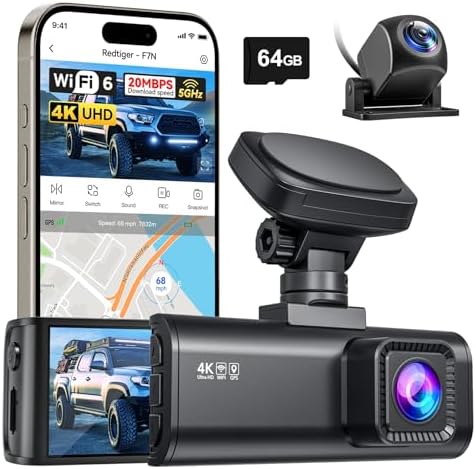
Get our data-driven analysis on the REDTIGER F7N review.
- 360-degree Equirectangular vs. Fisheye – A format choice; Equirectangular is the standard for most VR platforms, while Fisheye is a raw, unstitched projection.
- H.265 (HEVC) vs. H.264 – A compression standard; H.265 is the modern requirement for high-resolution immersive video to ensure smooth playback.
- Resolution – The total count of individual color points on the display; a higher number provides more detail but requires more processing power and storage.
- Frame Rate – The number of individual images displayed every second; higher frame rates like 60fps or 120fps ensure smoother motion during active movement.
- Field of View – The extent of the observable world visible at one time; in 360-degree cameras, this is inherently 360 degrees, but lens quality affects the edges.
Power and Storage Requirements for High Resolution VR Camera Recording
Vr camera power and storage requirements are dictated by the high data demands of immersive video. A MicroSD Card is the standard storage medium; you must ensure the card supports the specific write speeds required by the camera’s maximum resolution to avoid recording errors. Battery Grip options provide a way to extend recording time for long-form immersive content, as high-resolution 360-degree recording drains internal batteries quickly. External Microphone units provide directional audio for immersive environments, which is often necessary because internal microphones may struggle to capture clear sound in a 360-degree space.
View our full spec breakdown for the Vantrue N2 Pro analysis.
- MicroSD Card – The storage media; you must check the card’s “V” rating (like V30 or V60) to ensure it can handle high-bitrate 8K data.
- Battery Grip – An external power source; these are necessary if you plan to record for longer than 30-60 minutes at high resolutions.
- External Microphone – An audio input; these provide higher fidelity and directional sound that matches the immersive visual.
- Night Vision – A specialized recording mode; 1 of the 3 listings we screened states it uses infrared, while 1 states it uses standard night vision.
- Parking Mode – A loop-recording feature; 2 of the 3 listings we screened state they include this functionality for continuous monitoring.
What terms are often confused?
Buyers often confuse Resolution with Image Clarity. While a higher pixel count is a requirement for detail, the clarity of a vr camera is actually determined by the Lens Element and the Processor‘s ability to stitch the images without creating artifacts. Another common point of confusion is Frame Rate versus Smoothness. While a high frame rate is a component of smoothness, the quality of the H.265 encoding determines if the video remains fluid or stutters during playback. Finally, Equirectangular and Fisheye are often used interchangeably by some retailers, but they represent different ways the camera‘s software interprets the world; Equirectangular is what you see in a VR headset, while Fisheye is the raw data before it is “unwrapped” into a sphere.
See our full technical overview of the Meeting 360 Ultra breakdown.